Conveyor Belts for the Steel Industry: Challenges and Solutions
Steel plants operate under some of the harshest conveyor conditions in any industry. Learn the biggest conveyor belt challenges in steel manufacturing and the belt types designed to improve reliability and reduce downtime.
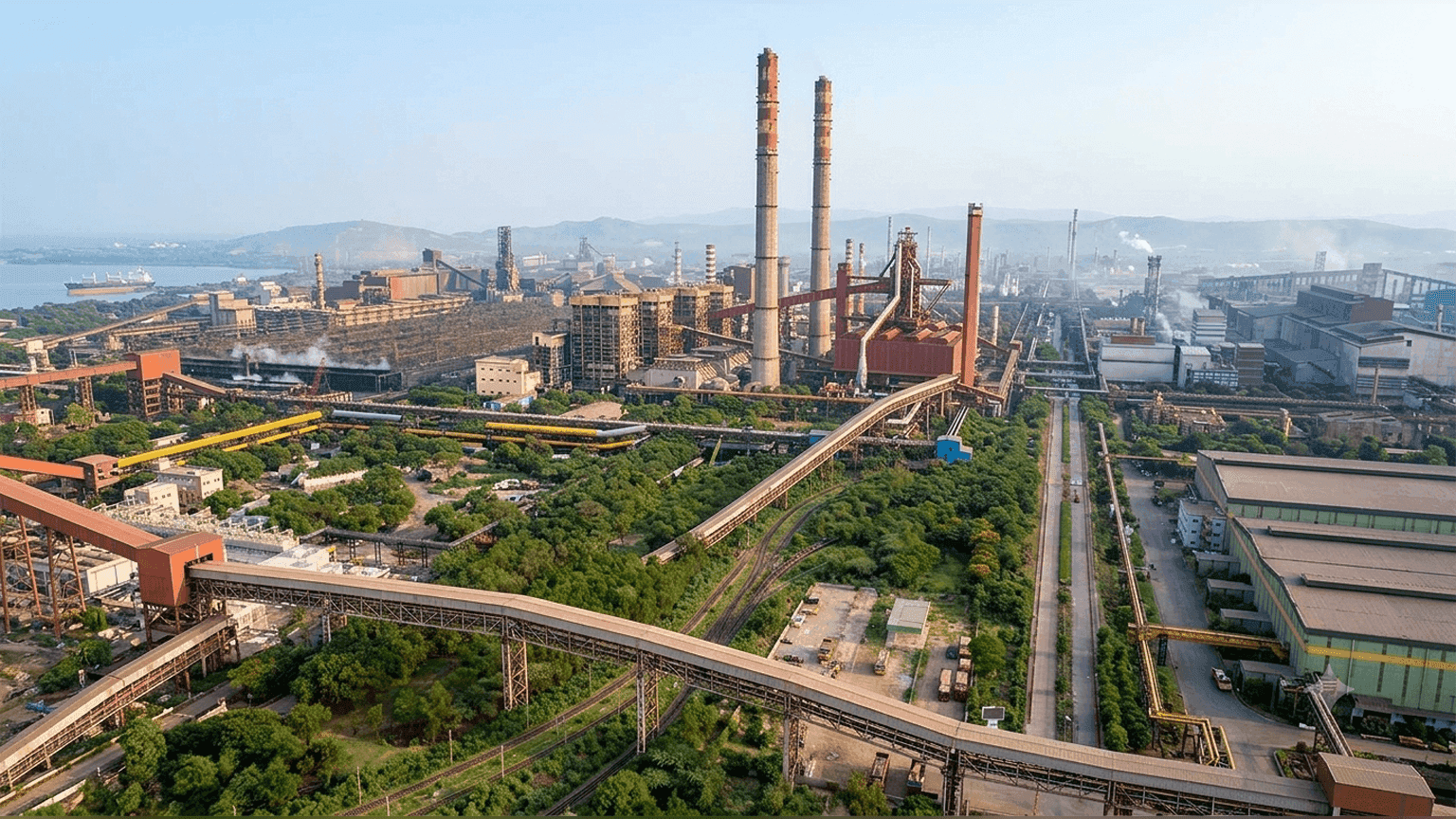
Steel manufacturing is one of the most demanding environments for any conveyor system. From iron ore stockyards and sinter plants to blast furnace feed lines and slag handling systems, conveyor belts are exposed to extreme heat, abrasive materials, heavy impact, and continuous operation.
Selecting the right conveyor belt for each application is critical to reducing downtime, extending belt life, and maintaining reliable material handling throughout the plant.
The Biggest Conveyor Belt Challenges in Steel Plants
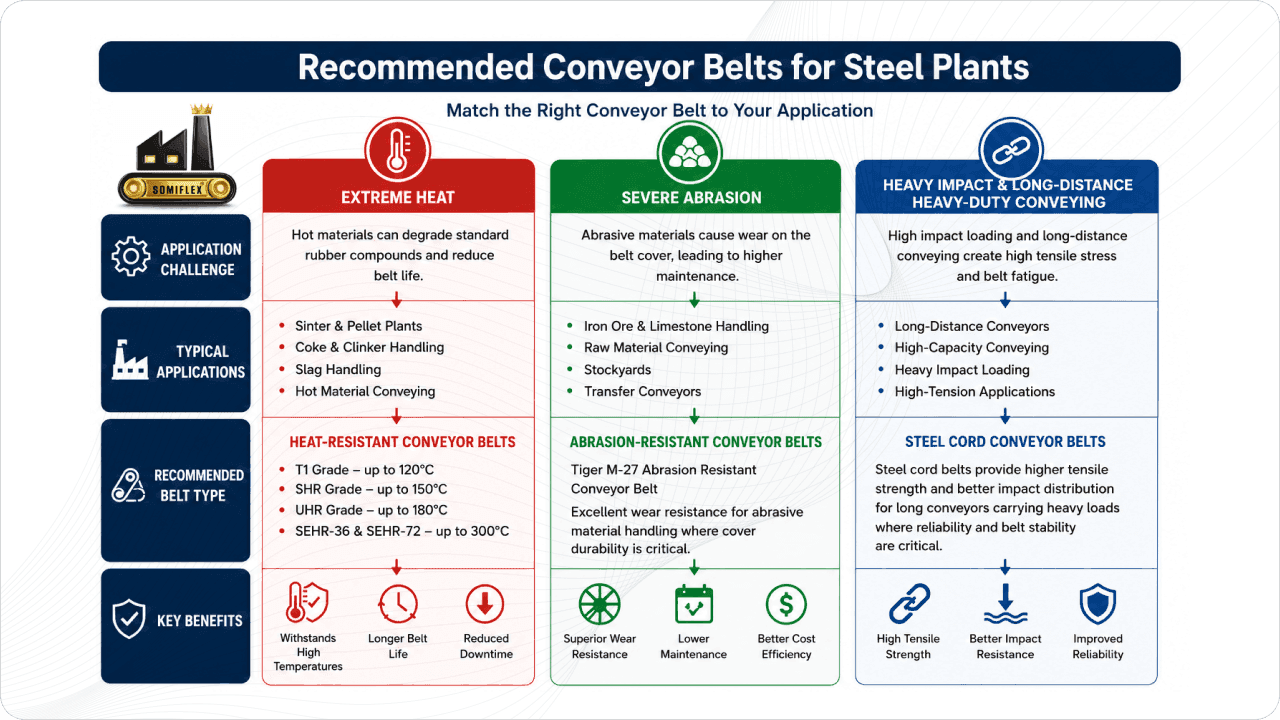
- Extreme Heat: Hot materials such as sinter, coke, clinker, and slag can quickly degrade standard rubber compounds. Heat-resistant conveyor belts are essential for maintaining performance in high-temperature applications.
- Severe Abrasion: Iron ore, limestone, coke, and other raw materials continuously wear conveyor belt covers during transport. Abrasion-resistant compounds help extend belt life and reduce maintenance in these demanding conditions.
- Heavy Impact Loading: Large lumps of material create high impact forces at transfer points, increasing the risk of cover damage and carcass failure. Impact-resistant belt constructions improve durability under continuous loading.
- Long-Distance Heavy-Duty Conveying: Long conveyors carrying heavy loads place sustained tensile stress on the belt. High-strength constructions are required to maintain stability and reliable performance over extended distances.
Why Steel Plants Demand Specialized Conveyor Belts
No single conveyor belt can handle every stage of steel production. Different processes expose belts to different operating conditions, making application-specific belt selection essential.
Steel plants require specialized conveyor belts because:
- High-temperature processes demand heat-resistant rubber compounds.
- Abrasive raw materials require superior wear resistance.
- Heavy impact loading needs stronger carcass construction.
- Long-distance conveyors require high tensile strength and dimensional stability.
- Continuous operation demands reliable belts that minimise downtime and maintenance.
Recommended Conveyor Belts for Steel Plants
Heat-Resistant Conveyor Belts
Heat-resistant conveyor belts should be selected based on the maximum conveyed material temperature rather than the surrounding ambient temperature.
- Heat Resistant Conveyor Belt - T1 Grade - up to 120°C
- SHR Grade Conveyor Belt - Super Heat Resistant - up to 150°C
- UHR Conveyor Belt - Ultra Heat Resistant - up to 180°C
- Crack Resistant Conveyor Belt - SEHR-36 & SEHR-72 - up to 300°C
Abrasion-Resistant Conveyor Belts
For raw material handling, stockyards, and transfer conveyors carrying abrasive materials, the Tiger M-27 Abrasion Resistant Conveyor Belt provides excellent wear resistance for stockyards, transfer conveyors, and raw material handling where cover durability is the primary requirement.
Steel Cord Conveyor Belts
Designed for demanding bulk material handling, these belts provide exceptional tensile strength, minimal elongation, and reliable performance over long conveying distances.
Recommended for:
- Long-distance conveyors
- High-capacity conveying
- Heavy impact loading
- High-tension applications
Conveyor Belts Engineered for Steel Plants
From raw material handling to hot material conveying, Somi Conveyor Beltings Ltd. manufactures conveyor belts engineered for demanding steel plant operations. Whether you need heat-resistant belts for sinter and slag lines, an abrasion-resistant belts for raw material handling, or a steel cord belts for long-distance high-capacity conveying — our team will match the right construction and grade to your operating conditions.