
Conveyor Belts for Power Plants: Applications, Challenges and Belts
Power plants rely on conveyor belts to transport coal, limestone, ash, and alternative fuels across demanding material-handling systems. Learn about common challenges and how to select the right conveyor belt for reliable power plant operations.
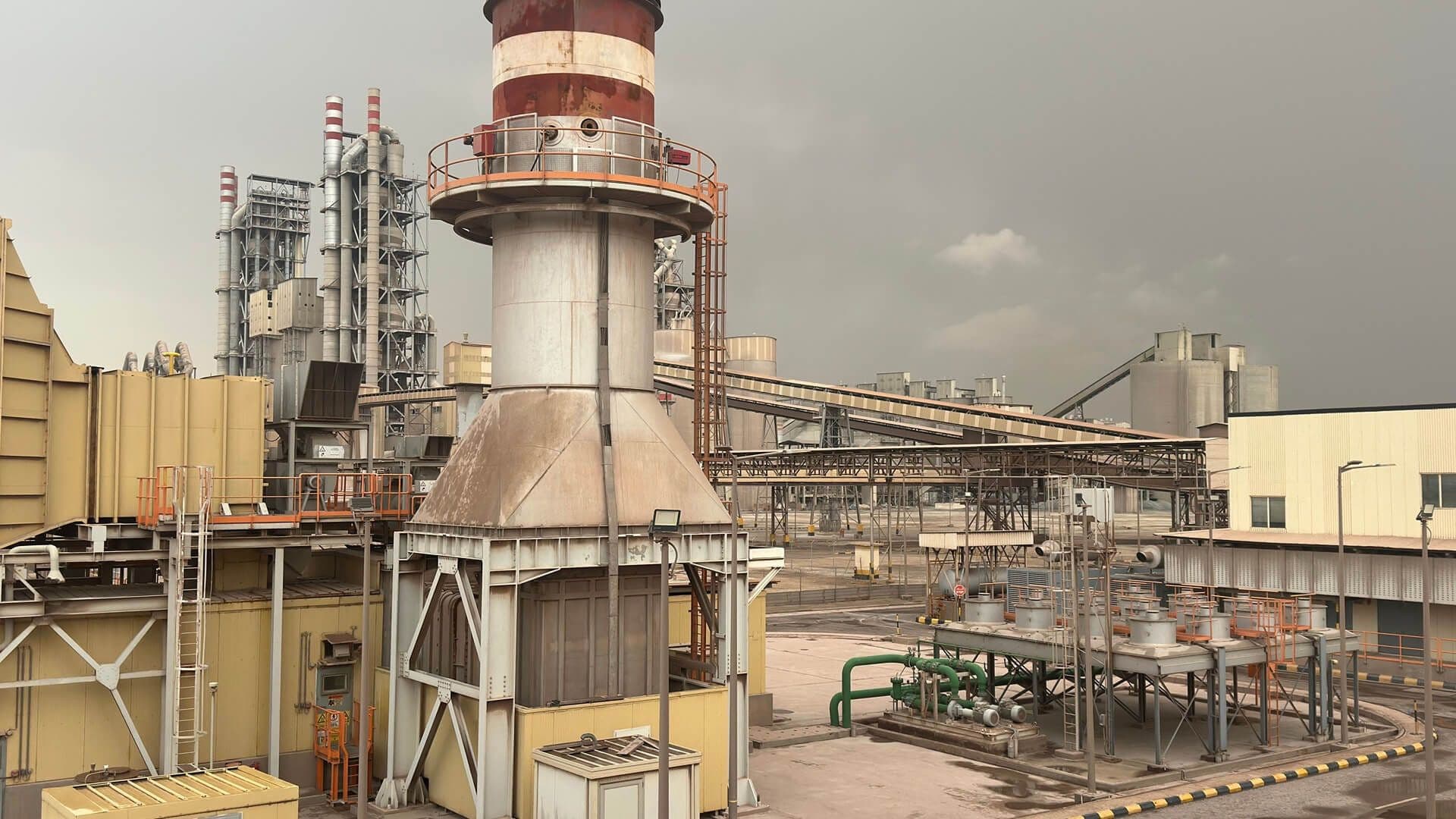
A power plant is an industrial facility that converts fuels or other energy sources into electricity for homes, businesses, and industries. In thermal power plants, conveyor systems play an important role in transporting coal, limestone, ash, and other bulk materials required for plant operations.
From fuel handling to ash management, conveyor belts support the continuous movement of materials across different stages of power plant operations. The demanding nature of these applications makes proper belt selection important for reliable and efficient material handling.
Where are Conveyor Belts used in Power Plants?
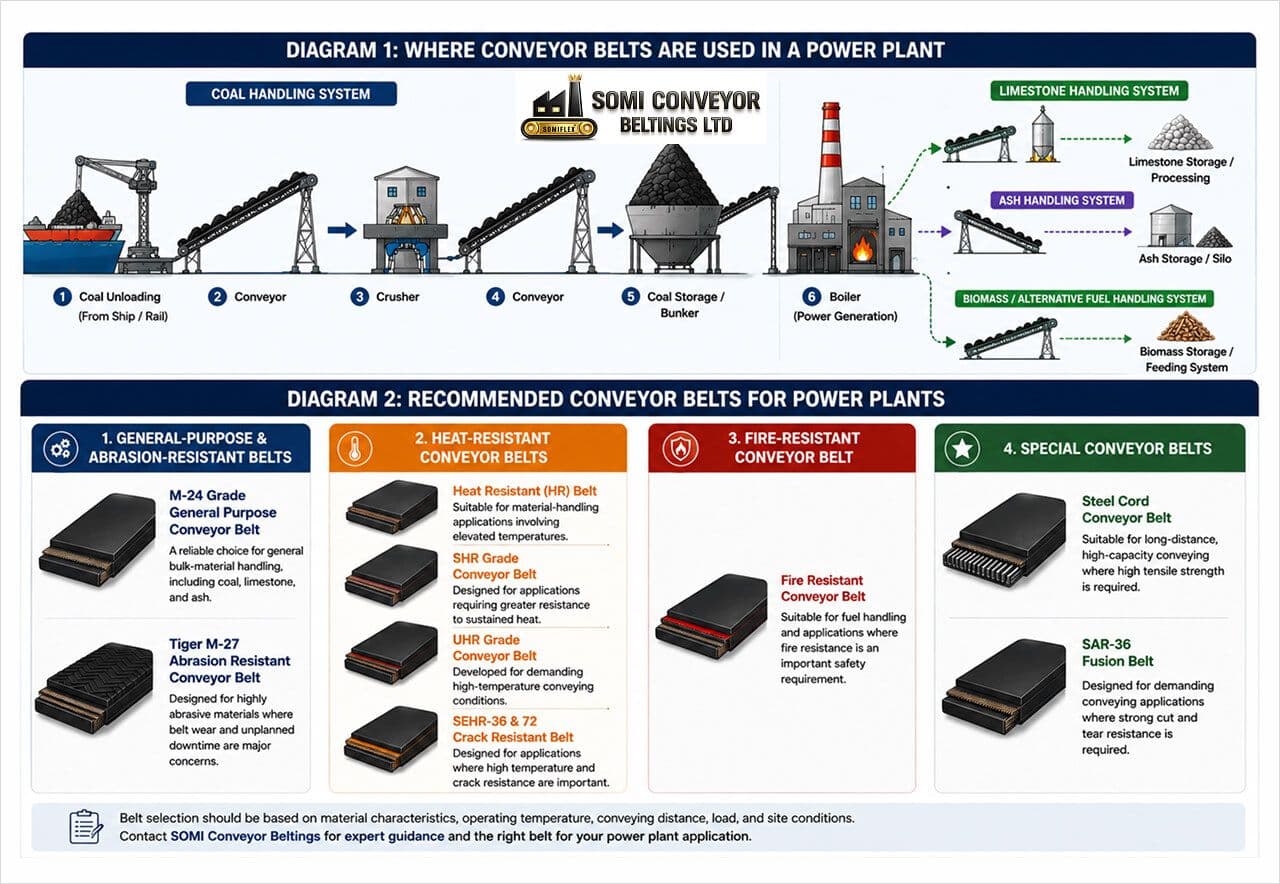
Conveyor belts are primarily used for transporting bulk materials within power plant material-handling systems. Common applications include coal, limestone, ash, and alternative fuels.
Coal Handling
Coal conveyor belts transport fuel from unloading and storage areas to crushers, bunkers, and other fuel-handling systems. Because coal can be abrasive and is often handled continuously in large quantities, the belt needs to withstand regular wear and heavy material loading.
Limestone Handling
Limestone is used in several power plant processes, including flue gas treatment. Conveyor systems transport limestone from storage areas to crushing, processing, or feeding systems. The abrasive nature of limestone makes abrasion resistance an important consideration when selecting a conveyor belt for these applications.
Ash Handling
Power generation can produce fly ash and bottom ash that need to be transported to storage, processing, or disposal areas. Conveyor belts used for ash handling must be capable of handling abrasive material while maintaining reliable performance during continuous operation.
Biomass and Alternative Fuel Handling
Some power plants use biomass and other alternative fuels as part of their fuel mix. Conveyor systems can transport materials such as biomass pellets and other solid fuels to storage and feeding systems. The belt selection depends on factors such as material characteristics, loading conditions, temperature, and conveying requirements.
What Challenges do Conveyor Belts face in Power Plants?
Power plant conveyor systems can operate for long hours under demanding conditions. The main challenges include:
- Abrasion: Coal, limestone, ash, and other bulk materials can gradually wear the conveyor belt surface. Continuous exposure to abrasive materials can reduce belt service life if the belt is not designed for the application.
- Impact at Loading Points: Heavy or large material falling onto the belt can create repeated impact at loading zones. A suitable belt construction can help withstand these conditions and reduce the risk of premature damage.
- Heat Exposure: Certain power plant applications involve elevated material temperatures. When hot materials are conveyed, the belt must be capable of handling the required temperature without excessive deterioration.
- Continuous Operation: Material-handling systems in power plants are expected to operate reliably for extended periods. Unexpected belt damage or failure can interrupt material flow and increase maintenance requirements.
- Dust and Material Spillage: Coal, ash, limestone, and other bulk materials can generate dust and spillage during conveying. Proper conveyor design, belt selection, and regular maintenance help maintain cleaner and more reliable operations.
Why the Right Conveyor Belt Matters?
Selecting a conveyor belt according to the actual application can help power plants achieve:
- Longer belt service life
- Better resistance to abrasion and impact
- Reliable material handling
- Reduced maintenance requirements
- Lower risk of unexpected downtime
The objective is not simply to select a strong conveyor belt, but to select one with the right properties for the material and operating conditions.
Which Conveyor Belt is Recommended for Power Plants?
The right conveyor belt depends on the material being handled, operating temperature, abrasion level, conveying distance, and other site conditions. SOMI offers a range of conveyor belts suited to different power plant material-handling requirements.
General Purpose Conveyor Belts
- M-24 Grade General Purpose Conveyor Belt: a reliable everyday choice for coal, limestone, and ash handling
- Tiger M-27 Abrasion Resistant Conveyor Belt: designed for highly abrasive materials where belt wear and unplanned downtime are major concerns
Heat Resistant Conveyor Belts
- Heat Resistant (HR) Belt: suitable for material-handling applications involving elevated temperatures.
- SHR Grade Conveyor Belt: designed for applications requiring greater resistance to sustained heat.
- UHR Grade Conveyor Belt: developed for demanding high-temperature conveying conditions.
- SEHR-36 & 72 Crack Resistant Belt: designed for applications where high temperature and crack resistance are important.
Fire Resistant Conveyor Belts
- Fire Resistant Conveyor Belt: suitable for fuel handling and applications where fire resistance is an important safety requirement.
- SEHR-36 & 72 Crack Resistant Belt — doubles up where heat and fire risk overlap
Steel Cord Conveyor Belt
- Steel Cord Conveyor Belt: suitable for long-distance, high-capacity conveying where high tensile strength is required.
- SAR-36 Fusion Belt: designed for demanding conveying applications where strong cut and tear resistance is required.
The belt should ultimately be selected according to the material, belt length, conveying capacity, loading conditions, temperature, and operating environment.
Conveyor belts are an important part of material handling in power plants, supporting the transportation of coal, limestone, ash, biomass, and other bulk materials. Since these applications can involve abrasion, impact, heat, heavy loading, and continuous operation, choosing the appropriate belt construction is essential for reliable performance.
With the right combination of tensile strength, abrasion resistance, heat resistance, or fire resistance, conveyor belts can provide dependable material handling and help support continuous plant operations.
Looking for the right conveyor belt for your power plant application? Request a Quote from SOMI Conveyor Beltings Ltd.