
Common Conveyor Belt Failures: Causes, Warning Signs and Prevention
Most conveyor belt failures give warning signs long before the belt stops. Learn the most common failure types, what causes them, how to spot them early and how to prevent costly unplanned downtime.
A conveyor belt rarely fails without warning. In most plants, a failure that looks sudden has been building for weeks or months through small problems that went unnoticed: a belt running slightly off-centre, a worn cover, a roller that stopped turning. By the time the belt stops, the damage is done.
Knowing the common failure types, and what causes each one, makes it easier to catch problems early and keep the belt running.
What are the most common conveyor belt failures?
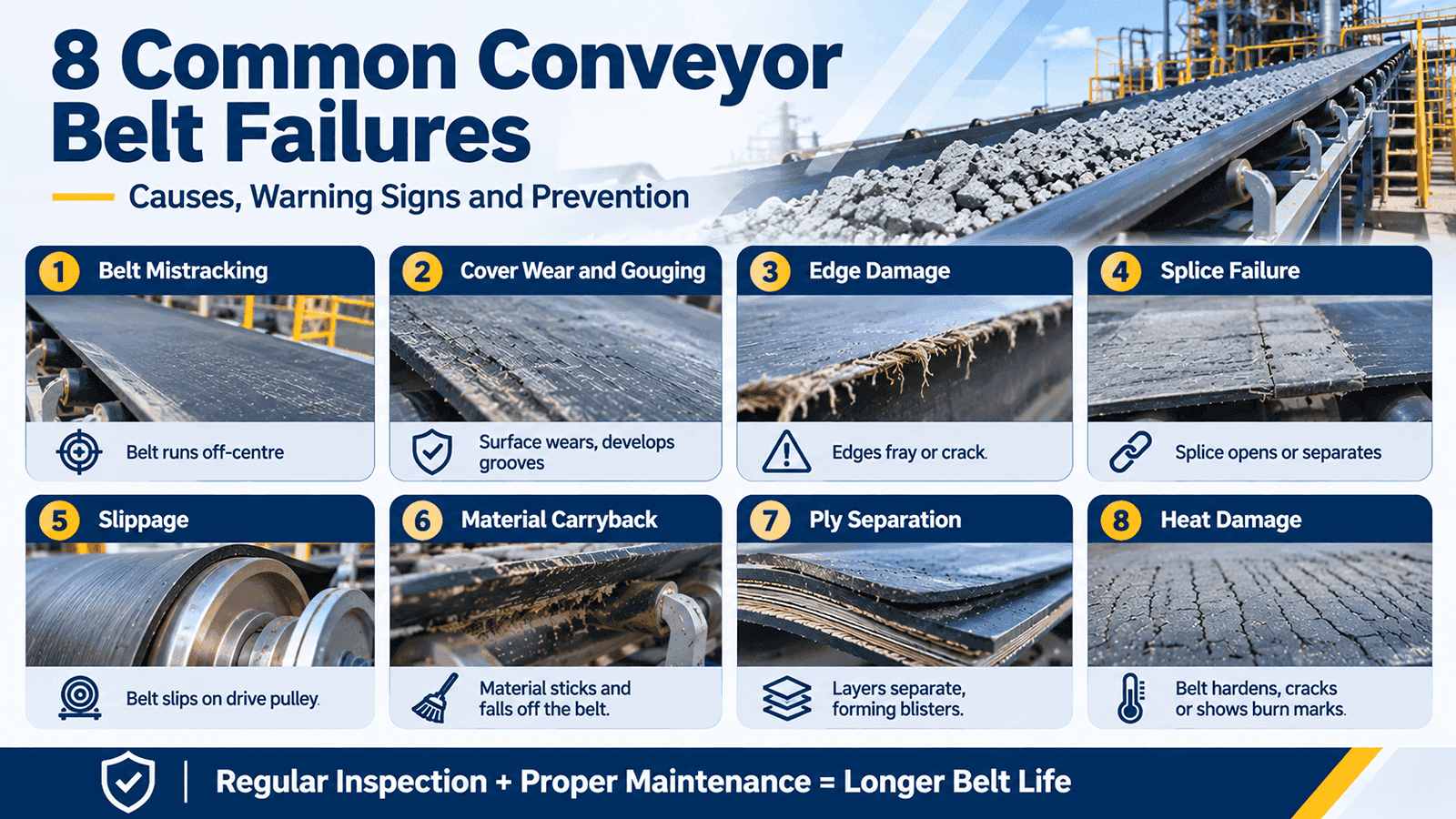
1. Belt mistracking
What it looks like: The belt drifts to one side, rubs against the structure or spills material.
Common causes:
- Misaligned idlers or pulleys
- Uneven loading, with material landing off-centre
- Material build-up on rollers and pulleys
- Poor splice alignment
- A damaged or uneven belt edge
Prevention: Align the conveyor properly during installation, keep idlers and pulleys clean, load material in the centre of the belt, and check tracking regularly.
2. Cover wear and gouging
What it looks like: The top cover thins, develops grooves, or shows cuts and gouges, especially under loading points.
Common causes:
- Abrasive material sliding on the belt
- Heavy impact from large or sharp lumps
- A cover grade that does not suit the application
- Material trapped between the belt and skirting or chute
Prevention: Choose a cover grade matched to the material, design transfer chutes to reduce impact and sliding, and add impact idlers at loading points. Our guide on how to select the right conveyor belt cover grade explains how abrasion, heat, oil and fire safety requirements affect the choice.
3. Edge damage
What it looks like: Frayed, torn or cracked belt edges.
Common causes:
- Persistent mistracking against the structure
- Material jamming between the belt and the frame
- Overloading or off-centre loading
Prevention: Fix tracking problems early. Edge damage nearly always follows mistracking, and once the edge is open, moisture and contamination can reach the carcass.
4. Splice failure
What it looks like: The splice opens, shows separation, or starts to fail at the joint.
Common causes:
- Poor splice preparation or workmanship
- A splice type unsuited to the belt tension
- Incorrect materials or curing
- Repeated flexing over small pulleys
- Belt tension higher than the design allows
Prevention: Use trained splicing crews, follow the correct procedure for the belt construction, and inspect splices on a fixed schedule.
5. Slippage
What it looks like: The belt slows or stops against the drive pulley, makes a squealing sound, or the pulley surface looks polished or worn.
Common causes:
- Low belt tension
- Worn or contaminated drive pulley lagging
- Wet or oily conditions at the pulley
- Overloading beyond the conveyor design
Prevention: Maintain correct tension, keep lagging in good condition and keep oil and water away from the drive pulley.
6. Material carryback and build-up
What it looks like: Material sticks to the belt and falls off along the return side, building up under the conveyor.
Common causes:
- Worn or badly adjusted belt cleaners
- Sticky or wet material
- No cleaner, or one that does not suit the material
Prevention: Fit suitable belt cleaners, maintain them, and clear spillage promptly. Build-up damages rollers and idlers, affects tracking and wears the belt faster.
7. Ply separation and delamination
What it looks like: Layers of the belt separate, causing blisters, soft spots or lifting covers.
Common causes:
- Damage that lets moisture, oil or chemicals into the carcass
- Excessive heat
- Repeated impact or flexing
- Cover damage that was never repaired
Prevention: Repair cuts and gouges quickly, choose belt construction that suits the operating environment, and avoid conditions the belt was not designed for.
8. Heat damage
What it looks like: Hardened, cracked or brittle covers, often with a shiny, burnt appearance.
Common causes:
- Hot material (such as clinker, sinter or coke) on a belt not designed for it
- Slippage generating friction heat
- Seized idlers rubbing against the belt
Prevention: Use heat-resistant belts where material is hot, avoid slippage, and replace seized rollers promptly.
Early warning signs to watch for
- Belt consistently running to one side
- Visible thinning of the top cover
- Cuts, gouges, or fraying at the edges
- Unusual noise from rollers or the drive
- Spillage along the conveyor
- Material build-up on idlers and pulleys
- Belt slowing or stopping under load
Wear indicators can also help. SOMI’s Eye on Belt, available in M-24 Grade and SAR-36 Fusion Belt, gives a visible signal of cover wear so replacement can be planned before the carcass is exposed.
Building a simple inspection routine
You do not need a complicated program to catch most failures early:
- Daily: Walk the conveyor, listen for unusual noise and look for spillage and tracking problems.
- Weekly: Check idlers, pulleys, belt cleaners and loading zones.
- Monthly: Inspect splices, edges and cover condition, and record wear.
- At shutdowns: Measure cover thickness, repair damage and replace worn components.
Recording what you find is just as important as the inspection itself. Trends show you when a belt is approaching the end of its life.
Prevention starts with the right belt
Many failures trace back to a belt that was not matched to the application in the first place. The right cover grade, strength and construction for the material, load and conditions makes every other maintenance step easier.
Facing repeated belt problems? Contact our team with your material, conveyor details and the type of failure you’re seeing, and we’ll help you find the cause and the right belt.