Conveyor Belts for Scrap & Recycling Plants: Challenges and Solutions
Scrap and recycling plants handle sharp, irregular and heavy materials every day. Learn the key conveyor belt challenges in these demanding applications and how to choose a belt for cuts, impact and abrasion resistance.
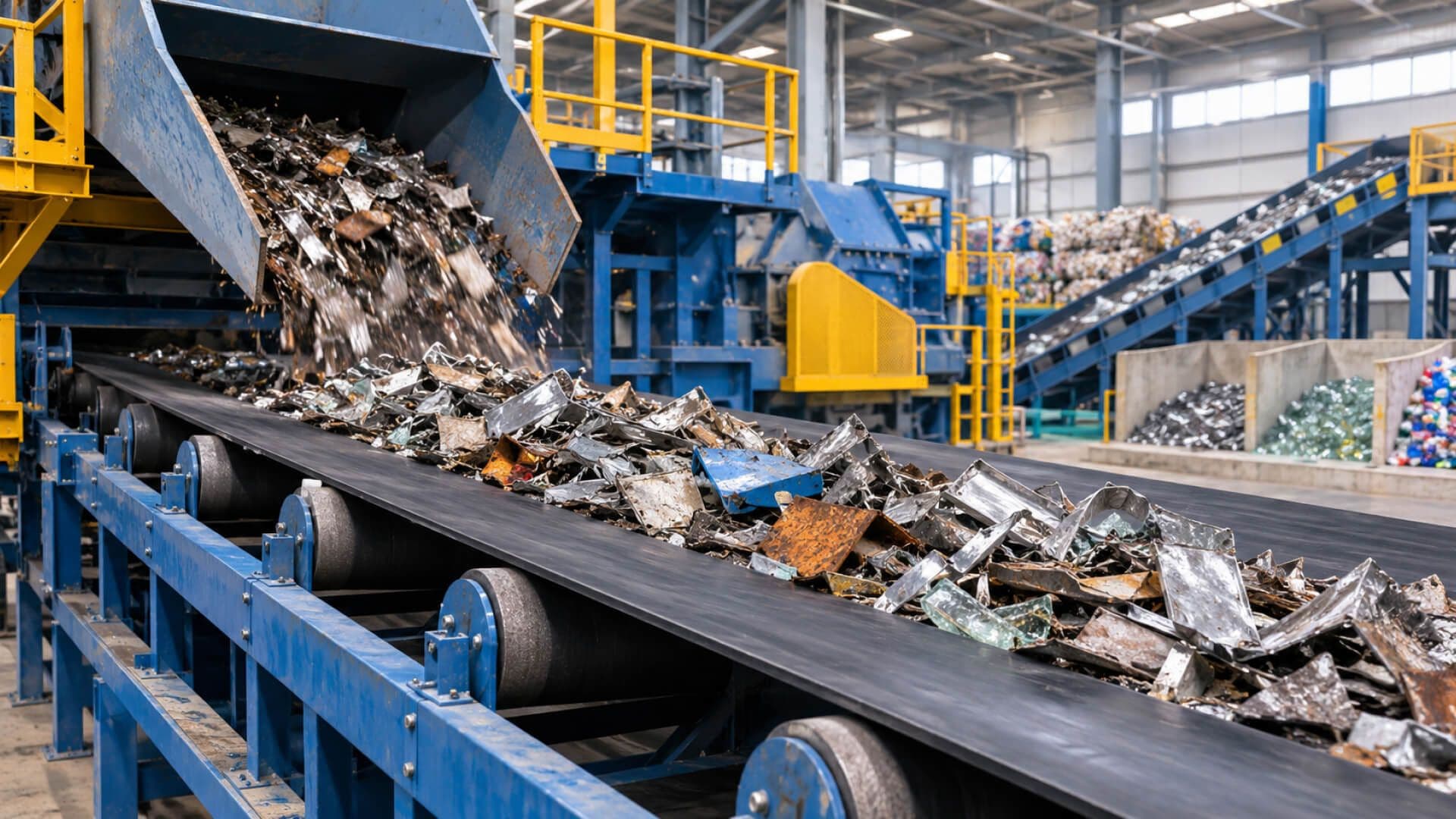
Scrap and recycling plants handle some of the most unpredictable material in industrial material handling. A single conveyor may carry shredded metal, broken glass, bulky offcuts, plastics and mixed waste, often within the same shift. Unlike more uniform bulk materials, scrap can have sharp edges, irregular shapes and varying weights.
This makes the conveyor belt one of the critical components in the plant. The right belt needs to withstand repeated impact, cutting, gouging and abrasion while maintaining reliable operation under demanding conditions.
Where conveyor belts are used in scrap and recycling plants
- Feeding shredders and crushers: Moving bulk scrap, vehicle bodies, appliances and mixed waste into size-reduction equipment.
- Shredder discharge: Carrying shredded material away from the machine, where the material may be abrasive and, depending on the process, exposed to heat or oil.
- Sorting and separation lines: Moving material through magnets, eddy current separators and manual or automated picking stations.
- Material recovery facilities: Transporting mixed recyclables through multiple sorting and recovery stages.
- Stockpiling and loading: Transferring sorted material to storage areas, bunkers and dispatch points.
Key challenges for conveyor belts
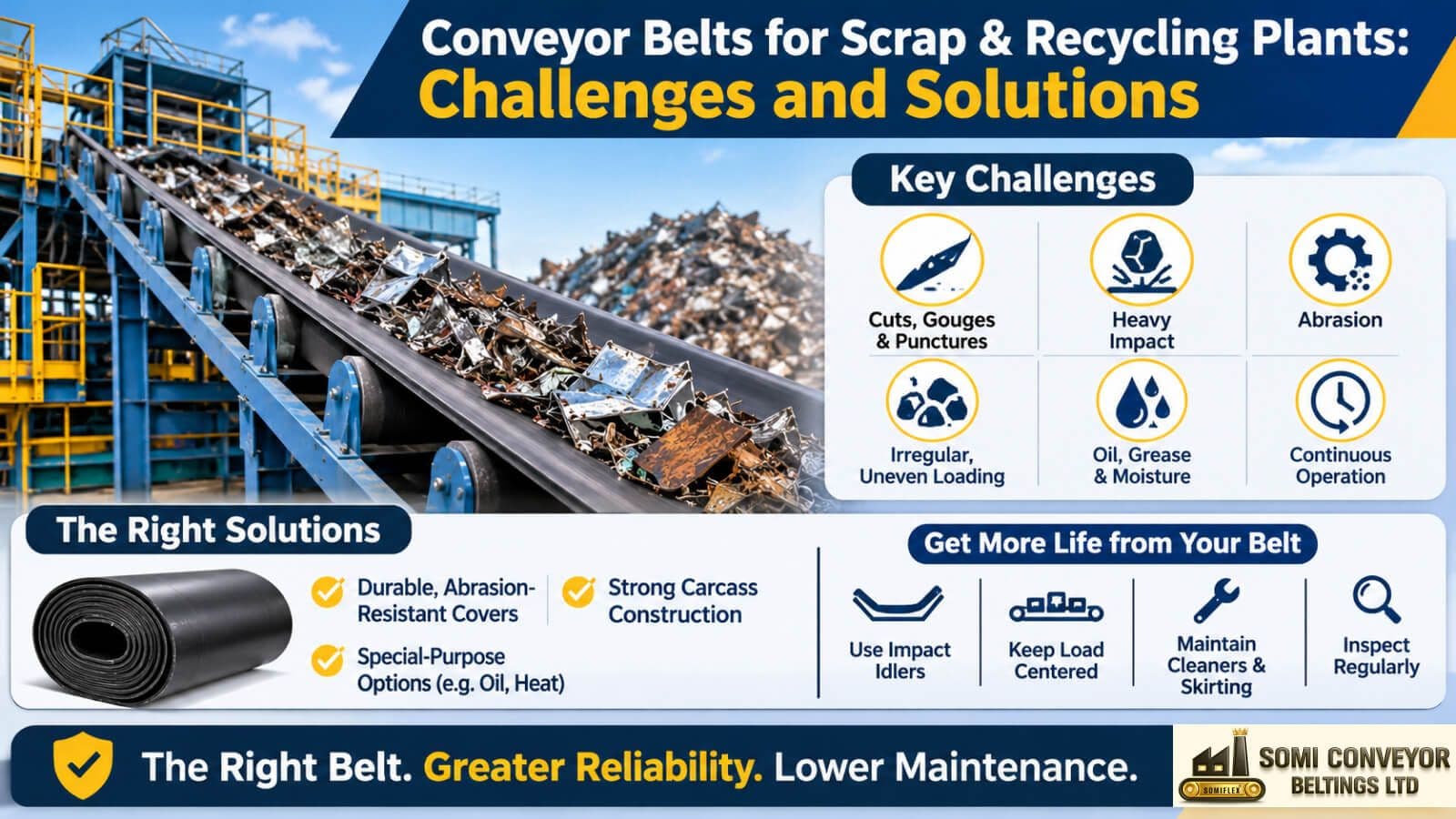
- Cuts, gouges and punctures. Sharp metal edges, broken glass and protruding pieces can damage the belt cover. Severe damage can extend into the carcass and reduce the belt's service life.
- Heavy impact. Bulky or dense scrap can fall onto the belt from significant heights at loading points. Repeated impact can damage the cover and carcass, particularly when the conveyor is not designed to absorb the loading forces.
- Abrasion. Shredded metals, glass and other abrasive materials can wear the belt cover continuously. Wear can become more severe where material slides across the belt or becomes trapped around skirting and transfer points.
- Irregular, uneven loading. Scrap arrives in different shapes, sizes and weights. Uneven loading can contribute to mistracking, spillage and increased wear along the belt and its edges.
- Oil, grease and moisture. Scrap from vehicles, machinery and industrial sources can contain oils, lubricants and moisture. Where exposure is significant, the belt cover compound needs to be selected for the operating conditions.
Continuous, demanding operation. Recycling lines are often closely connected to shredders, crushers and sorting systems. An unexpected belt failure can interrupt material flow and affect the operation of the wider processing line.
What to look for when selecting a belt
Cover compound and thickness. A belt should have a cover suited to the material being handled, with sufficient thickness to provide wear allowance in areas exposed to cutting, impact and abrasion.
Carcass strength. The belt needs adequate tensile strength and construction to handle the conveyor's operating loads and repeated impact from incoming material.
Oil resistance where needed. If the scrap contains significant oil or lubricants, an oil-resistant belt should be considered rather than relying on a standard cover compound.
Suitable construction for the duty. Specific operating conditions may require a special-purpose belt, such as a heat-resistant construction where the process exposes the belt to elevated temperatures.
Conveyor design. Belt selection works together with conveyor design. Suitable impact idlers, properly designed transfer chutes, effective skirting and controlled material drop heights can all help reduce belt damage and extend service life.
Belt solutions for scrap and recycling plants
- Crack-Resistant Conveyor Belt: Built to resist the surface damage and cover cracking caused by repeated sharp impacts.
- Abrasion Resistant Conveyor Belt: Designed to withstand the constant cutting and wearing action of scrap fragments moving across the belt.
- Heat-Resistant Conveyor Belt: For applications such as shredder discharge, where the material may be hot.
- Fusion Conveyor Belt: A fusion-spliced belt that gives a stronger joint than traditional mechanical splicing, which matters at high-impact feed points.
The right belt depends on the type and size of scrap, impact conditions, belt speed, material temperature and conveyor layout. Providing these operating details helps identify the appropriate belt construction and cover grade.
Getting more life from the belt
- Reduce material drop height and use suitable impact idlers at loading points.
- Centre the material on the belt and avoid overloading.
- Keep belt cleaners and skirting properly adjusted and maintained.
- Inspect the belt regularly for cuts, gouges, exposed fabric and other damage, and address problems early.
- Monitor mis-tracking and correct alignment issues before they cause significant edge damage.
Our guide on common conveyor belt failures explains the warning signs to watch for, and our guide on how to select the right conveyor belt cover grade covers how abrasion, heat and oil exposure affect the choice.
Choosing the right belt
Scrap and recycling plants need conveyor belts selected for the actual material and operating conditions rather than relying on a standard belt simply because it fits the conveyor. The appropriate cover, strength and construction can help reduce unplanned downtime, control maintenance requirements and extend belt service life.
Working on a scrap or recycling line? Contact our team with your material, conveyor details and operating conditions, and we can help you identify a suitable conveyor belt solution.