Conveyor Belts for Fertilizer & Chemical Plants: Applications and Solutions
Fertilizer and chemical plants expose conveyor belts to oils, chemicals, moisture and abrasive granules. Learn the key challenges in these plants and how to select a belt that stays reliable in demanding process conditions.
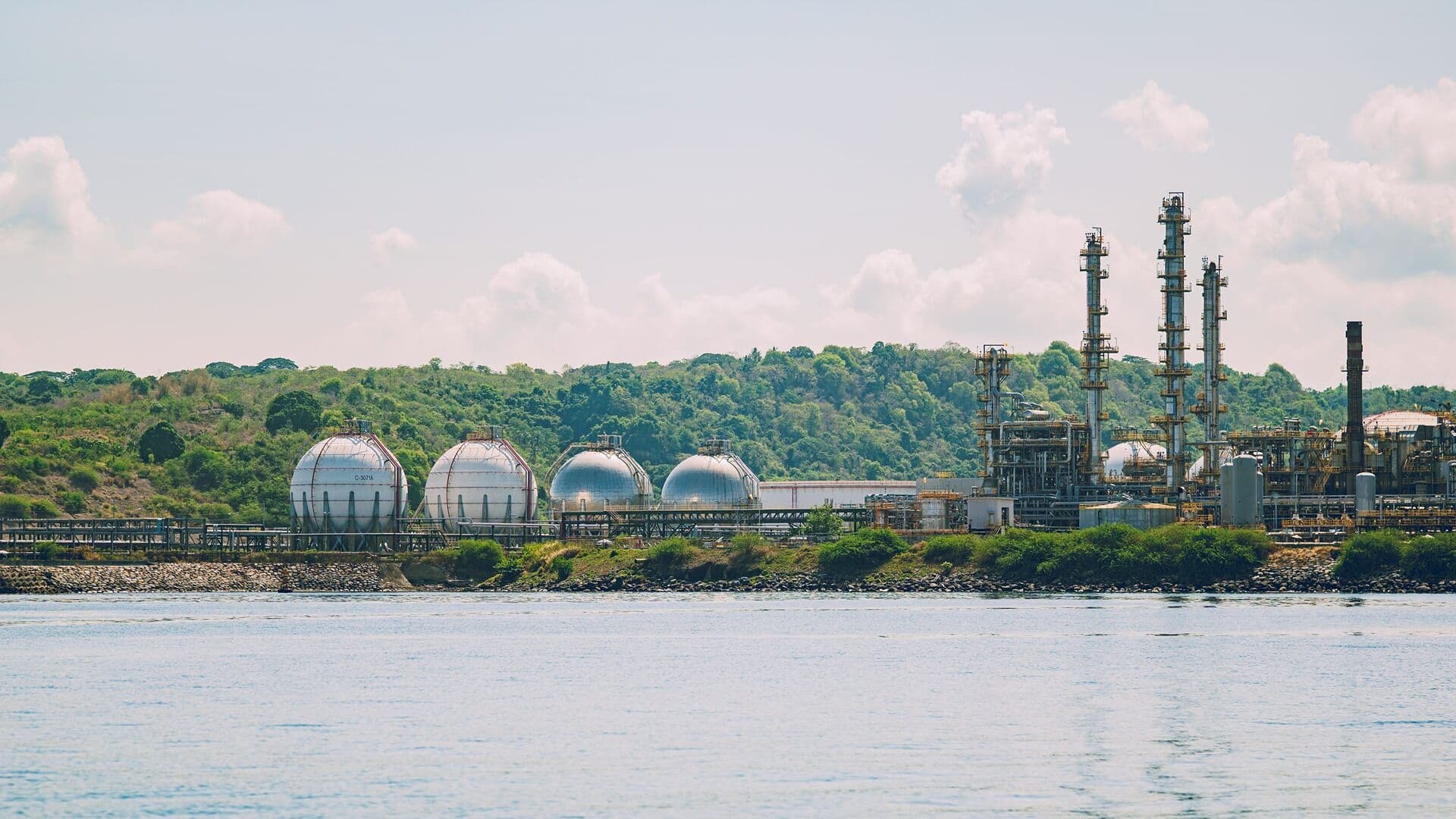
Fertilizer and chemical plants move large volumes of bulk material every day, from raw materials and intermediates to finished product ready for dispatch. In these plants, the conveyor belt is rarely just a way to move material from one point to another. It is in direct contact with the product, and often with oils, chemicals, moisture and dust as well.
A belt that works well in a quarry or a coal yard may not last in a fertilizer or chemical plant. Understanding what the belt is exposed to is the first step in choosing the right one.
Where conveyor belts are used in fertilizer and chemical plants
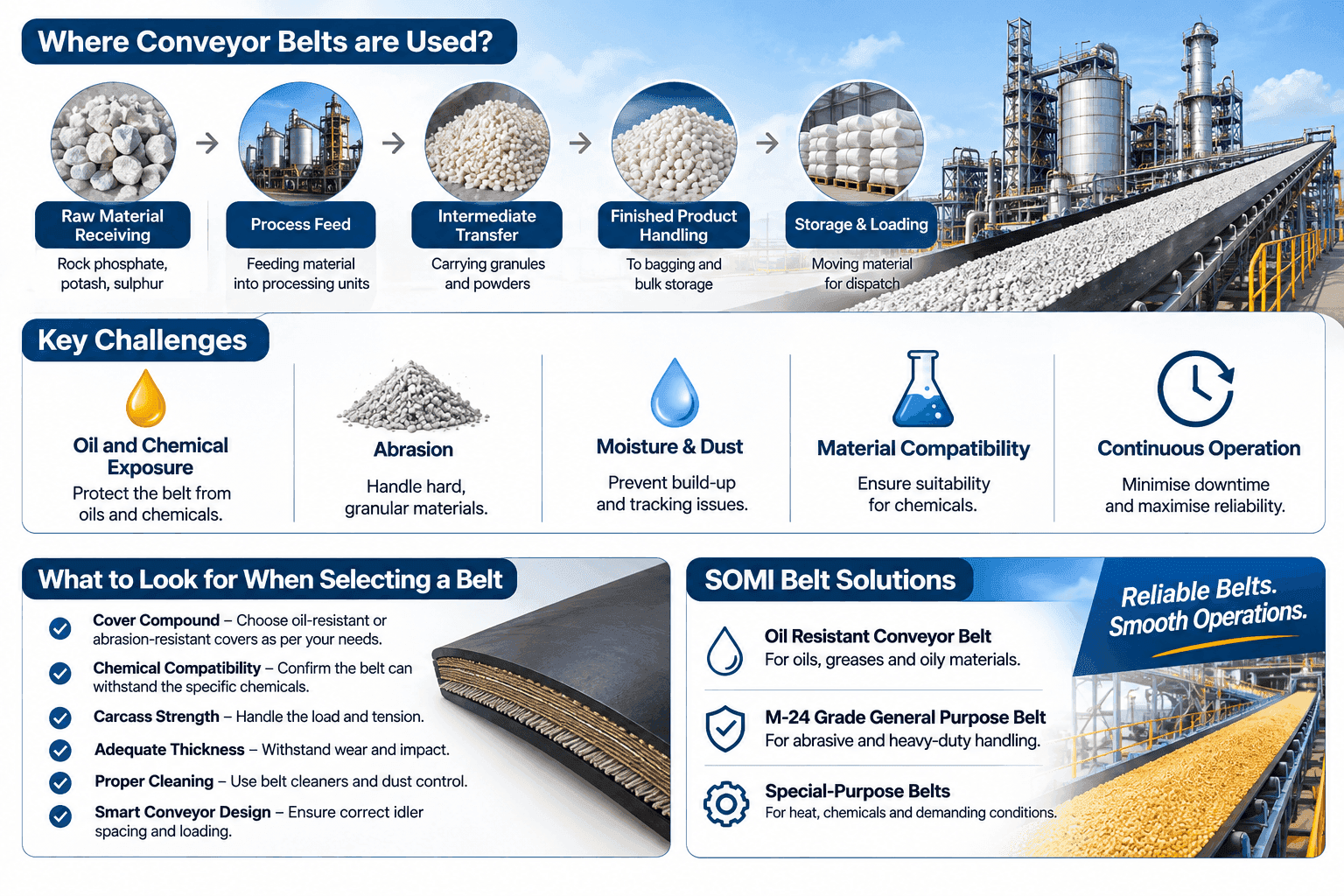
Conveyors appear at almost every stage of the process:
- Raw material receiving: moving incoming rock phosphate, potash, sulphur, salts and other raw materials from unloading points to storage.
- Process feed: feeding material into granulation, blending and processing units.
- Intermediate transfer: carrying granules, prills and powders between process stages.
- Finished product handling: transferring product to bagging lines, bulk storage and dispatch.
- Storage and loading: moving material in and out of warehouses, silos and loading areas.
Key challenges for conveyor belts
- Oil and chemical exposure: Process areas can expose belts to oils, greases, solvents and chemical spillage. Standard rubber covers can swell, soften or deteriorate when they are not suited to the contact. Over time this leads to cover damage, loss of grip and shorter belt life.
- Abrasion from granular materials: Many fertilizer products are hard, granular or crystalline. Raw materials such as rock phosphate can be especially abrasive. Continuous sliding contact wears down the top cover, particularly at loading points and transfer chutes.
- Moisture, dust and material build-up: Some fertilizers absorb moisture and become sticky or cake onto the belt surface. Fine dust can also settle on rollers and return idlers. Build-up affects belt tracking, increases wear and creates cleaning and housekeeping problems.
- Material compatibility: Different products and chemicals interact with rubber in different ways. A belt that suits one material may not suit another, so material properties need to be checked before the belt is specified.
- Continuous operation: Fertilizer and chemical plants often run for long hours, and an unplanned belt stoppage can hold up an entire process line. Reliability matters as much as the initial cost of the belt.
What to look for when selecting a belt
- Cover compound: Match the cover to what the belt will actually touch. Where oils or oily materials are present, an oil-resistant cover is the right starting point. Where the main problem is abrasion, a high-quality abrasion-resistant cover grade is more important.
- Chemical compatibility: Depends on the specific substance, its concentration, temperature and duration of contact. Oil resistance does not automatically guarantee resistance to other chemicals. Confirm material compatibility before specifying the belt.
- Carcass strength: The belt must have enough strength for the load, length and tension of the conveyor, with a sound bond between the cover and the carcass.
- Cover thickness: Thicker top covers give more wear allowance at loading points and in high-wear zones.
- Cleaning and sealing: Even the best belt will wear faster if carryback and spillage are not controlled. Proper belt cleaners, skirting and dust control protect the belt and the surrounding equipment.
- Conveyor design: Idler spacing, transfer chute design and loading arrangement all affect how long the belt lasts.
Belt solutions for fertilizer and chemical plants
SOMI manufactures a range of belts suited to these conditions:
- Oil Resistant Conveyor Belt: Designed for applications involving oils, greases and oily materials. Confirm suitability for the specific material being conveyed.
- M-24 Grade General Purpose Conveyor Belt: A suitable option for general bulk handling where abrasion and impact are the primary concerns and the material is compatible with the belt cover.
- Special-purpose conveyor belts: Where heat, fire safety or other demanding conditions apply, select the appropriate belt construction and cover properties for the actual operating requirements.
The right choice depends on the material, the conveyor layout and the operating conditions. Details such as the type of oil or chemical, material temperature and conveyor length all help narrow down the best belt.
Extending belt life in practice
- Keep the belt clean and control spillage at transfer points.
- Inspect the cover regularly for swelling, softening, cuts and uneven wear.
- Check that the belt tracks properly and that rollers are turning freely.
- Fix leaks and drips that put oil or chemicals on the belt.
- Review the belt specification when the product or process changes.
Choosing the right belt
Fertilizer and chemical plants need belts selected for the actual operating conditions, not just the nearest standard grade. Getting the cover, strength and construction right can reduce downtime, lower maintenance costs and give a longer service life.
Tell us about your material, conveyor details and operating conditions, and the SOMI team will help you choose the right belt.