
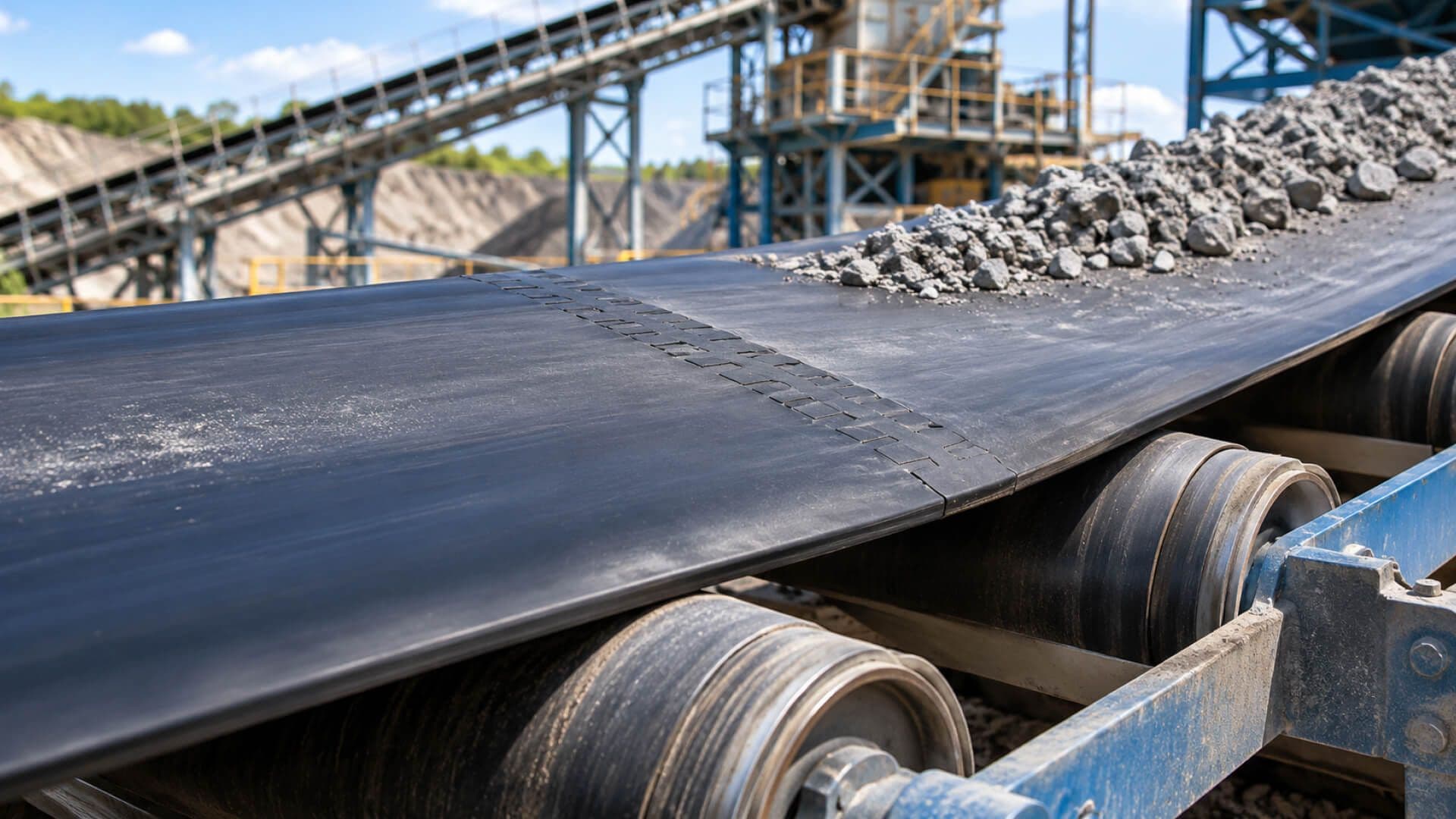
Conveyor Belt Splicing: Methods, Applications and Best Practices
Conveyor belt splicing is critical to reliable belt operation. Learn about common splicing methods, when they are used, factors that affect splice performance, and practices that help extend splice life.
Conveyor belts operate under continuous tension, bending and loading. The splice joining the belt ends must withstand these operating conditions while allowing the belt to move smoothly around pulleys.
Splicing is required when installing a new belt, repairing a damaged section or replacing an existing splice. The appropriate method depends on several factors, including belt construction, tensile strength, thickness, conveyor design, operating tension, pulley diameter and site conditions.
What is conveyor belt splicing?
Conveyor belt splicing is the process of joining two belt ends to form a continuous loop. The joint must transfer belt tension across the splice while remaining flexible enough to pass around the conveyor's pulleys.
Because the splice is repeatedly exposed to tension, bending, impact and environmental conditions, it is one of the most critical points on the belt.
Common conveyor belt splicing methods
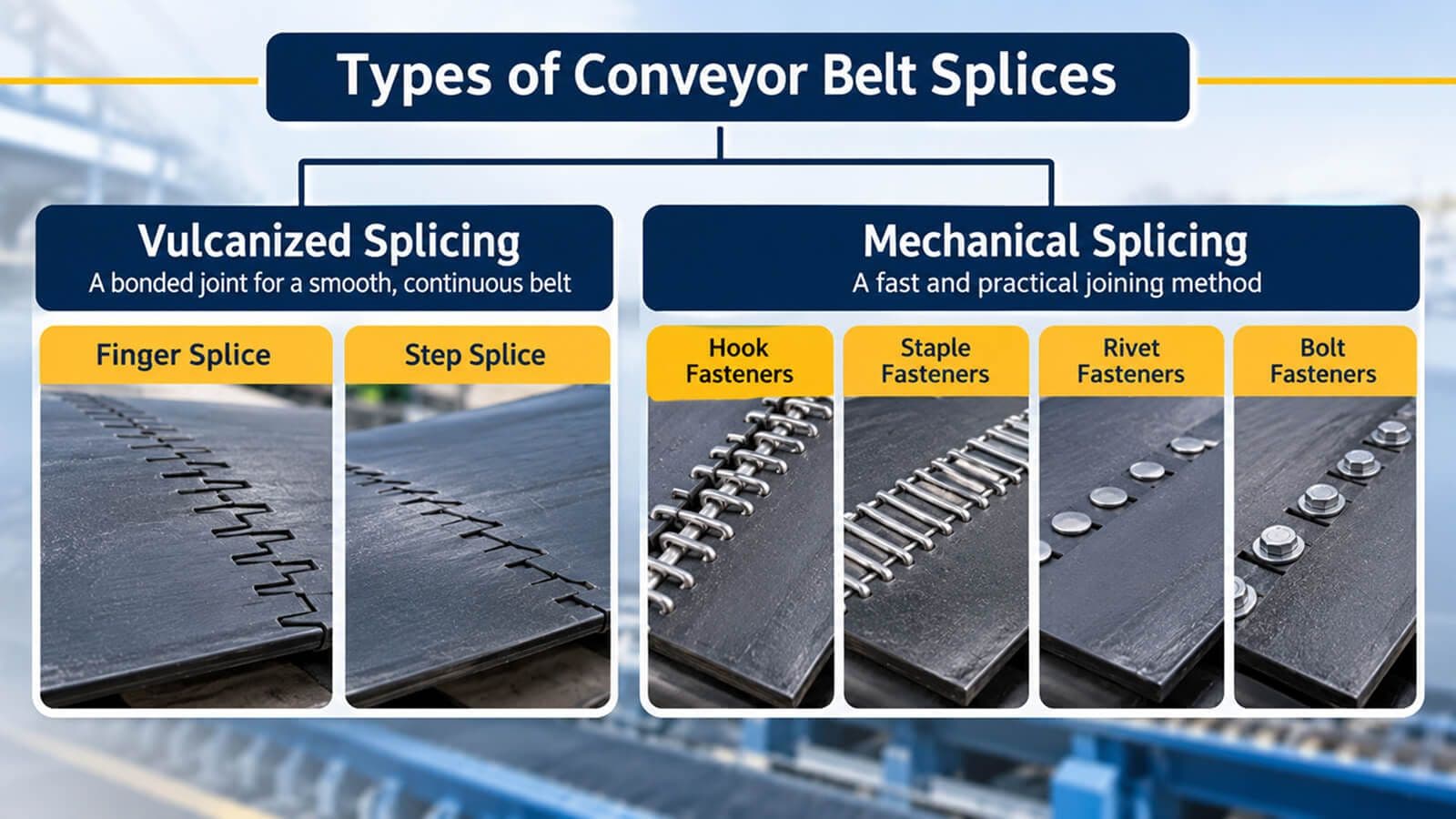
The two main approaches are vulcanized splicing and mechanical splicing.
1. Vulcanized splicing
Vulcanization creates a permanent bonded joint between the belt ends using prepared splice materials, heat and pressure.
For fabric belts, two common configurations are:
- Finger splice: The belt ends are cut into interlocking fingers, prepared with the appropriate bonding materials and cured in a vulcanizing press.
- Step splice: The belt plies are prepared in steps before the splice is assembled and cured.
A vulcanized splice can provide a smooth bonded joint without mechanical fasteners protruding from the belt surface. Its performance depends heavily on correct preparation, alignment, splice geometry and curing. The splice design and dimensions vary with belt construction and strength, so they should follow the belt manufacturer's specification.
2. Mechanical splicing
Mechanical splices join the belt ends with fasteners rather than bonding them together. Common fastener designs include:
- Hook fasteners: Wire hooks grip the belt ends and are joined with a hinge pin.
- Staple fasteners: Pre-assembled staple strips are installed across the belt ends and suit selected light- and medium-duty applications.
- Rivet fasteners: Rivets attach fastener plates through the belt and can provide a robust mechanical joint.
- Bolt fasteners: Bolted systems are available for heavier belt constructions and higher-tension applications.
Fastener systems differ in the belt thickness, operating tension and minimum pulley diameter they allow. Fastener selection therefore has to be matched to the belt rather than chosen by belt width alone.
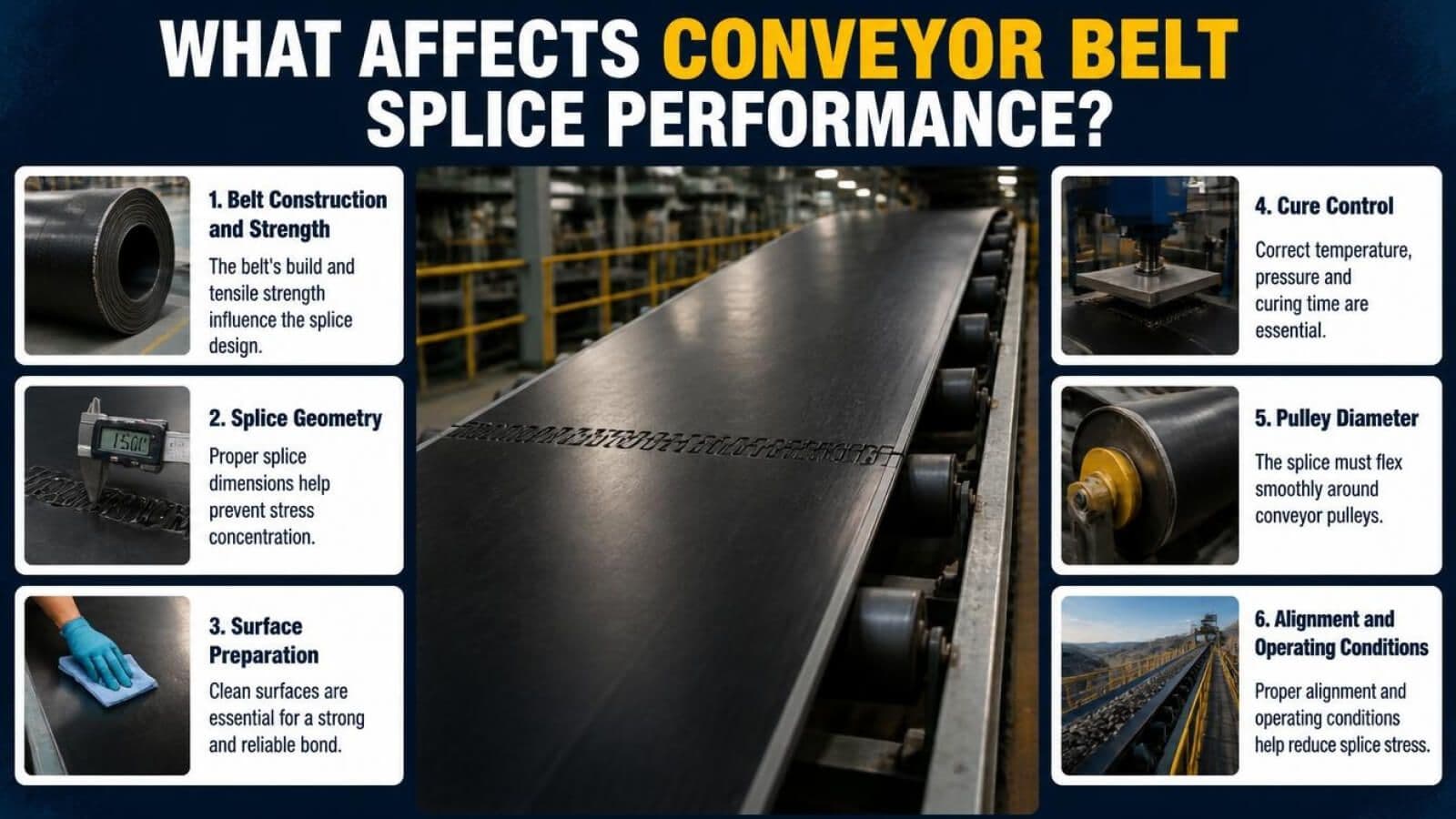
What affects conveyor belt splice performance?
A splice performs reliably only when the belt, splice method and installation process are properly matched.
1. Belt construction and strength
The belt's carcass construction, tensile strength, thickness and number of plies influence the splice design. The splice must transfer the belt's operating forces without creating excessive stress at the joint.
2. Splice geometry
A splice that is too short, incorrectly stepped or poorly aligned can create concentrated stresses and premature damage. Splice dimensions should come from the belt manufacturer's specification rather than a generic rule.
3. Surface preparation
For bonded and vulcanized splices, preparation of the belt surfaces is critical. The splice area must be clean and properly prepared before bonding materials are applied. Contamination, moisture or inadequate preparation can compromise the finished joint.
4. Cure control
For a vulcanized splice, temperature, pressure and curing time must be controlled together. There is no single universal cure setting for every belt, so the values must follow the belt, the splice materials and the specified procedure.
5. Pulley diameter and flexibility
The splice must flex repeatedly as it travels around the conveyor pulleys. Mechanical fasteners are specified with minimum pulley diameters, and vulcanized splice design must also account for the belt's ability to flex through the conveyor.
6. Alignment and operating conditions
Proper belt alignment helps maintain even loading and reduces unnecessary stress on the splice. Operating conditions such as impact, excessive tension and uneven material loading can also affect splice performance.
Common conveyor belt splice problems
A splice can become a source of belt trouble when it is incorrectly installed, damaged or subjected to conditions beyond its intended capability. Common warning signs include:
- Separation or lifting: A bonded splice may begin to separate when poorly prepared, improperly cured or overloaded.
- Fraying or edge damage: This can indicate poor alignment, mechanical damage or incorrect splice preparation.
- Fastener pull-out or loosening: Mechanical splices can deteriorate when the fastener system is incorrectly selected, installed or overloaded.
- Uneven tracking: A misaligned splice can create a visible tracking disturbance each time it passes through the conveyor.
- Noise or vibration: A damaged or poorly installed splice may be noticeable as it passes over pulleys and idlers.
- Repeated failure at the same location: When a splice keeps failing while the surrounding belt remains in reasonable condition, the splice design, installation procedure or operating conditions should be investigated rather than simply replacing the joint.
A damaged splice should be inspected promptly. For wider causes of belt damage, see Common conveyor belt failures.
How to extend conveyor belt splice life
Good conveyor operation and regular inspection reduce unnecessary stress on the splice.
- Maintain correct belt tension: Avoid excessive tension and follow the belt manufacturer's recommended operating and take-up conditions.
- Keep the belt properly aligned: Mis-tracking creates uneven forces and damage around the splice.
- Maintain pulleys and idlers: Worn or damaged components increase vibration and mechanical stress.
- Control loading conditions: Avoid excessive impact, overloading and uneven material distribution.
- Inspect the splice regularly: Look for separation, cracking, edge damage or fastener movement before they become serious.
- Keep the splice area clean: Material trapped around a mechanical splice or damaged belt area can accelerate wear.
- Record splice condition: Tracking condition during routine inspections helps identify recurring problems before they cause unplanned downtime.
Choosing the right splicing method
There is no universal splice that suits every conveyor belt. The decision should consider:
- Belt construction and tensile strength
- Belt thickness and number of plies
- Belt speed and operating tension
- Pulley diameters
- Material being conveyed
- Temperature and environmental conditions
- Allowable downtime for installation or repair
- Availability of suitable splicing equipment
Vulcanized splicing is generally considered when a permanent, smooth joint is required and the belt and site support the use of a vulcanizing press. It is particularly relevant to demanding conveyors where the splice must repeatedly pass over pulleys without relying on fasteners.
Mechanical splicing can be useful when fast installation or repair matters, when access for vulcanizing equipment is limited, or when the belt specification permits mechanical fastening. A fastener system suited to a low-tension belt should not automatically be used on a high-tension conveyor.
The safest approach is to start with the belt manufacturer's splicing specification, then select the installation method, materials and equipment accordingly.
Reliable belt performance starts with the complete system
A conveyor belt splice is only one part of overall belt reliability. Belt construction, conveyor design, installation quality, alignment, loading conditions and maintenance all contribute to service performance.
A properly selected and installed splice helps the belt operate smoothly and reduces the risk of premature failure. For belt selection, operating requirements or application-specific guidance, contact SOMI Conveyor with your belt specifications and conveyor details.