
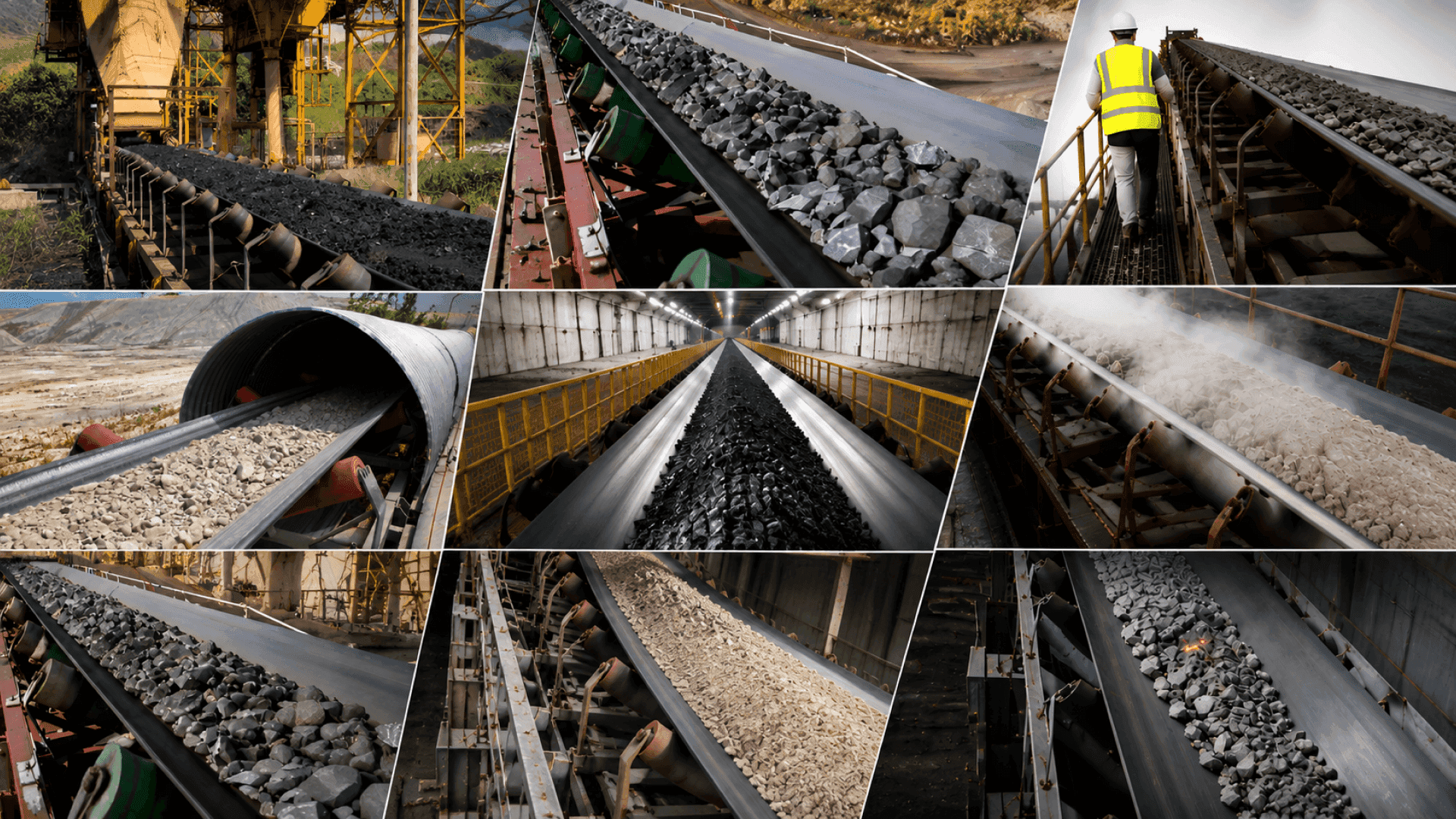
How to Select the Right Conveyor Belt Cover Grade for Your Application
Selecting the correct conveyor belt cover grade can significantly impact belt life, maintenance requirements, and operating costs. Learn how abrasion, heat, oil exposure, and fire safety requirements influence cover grade selection across different industrial applications.
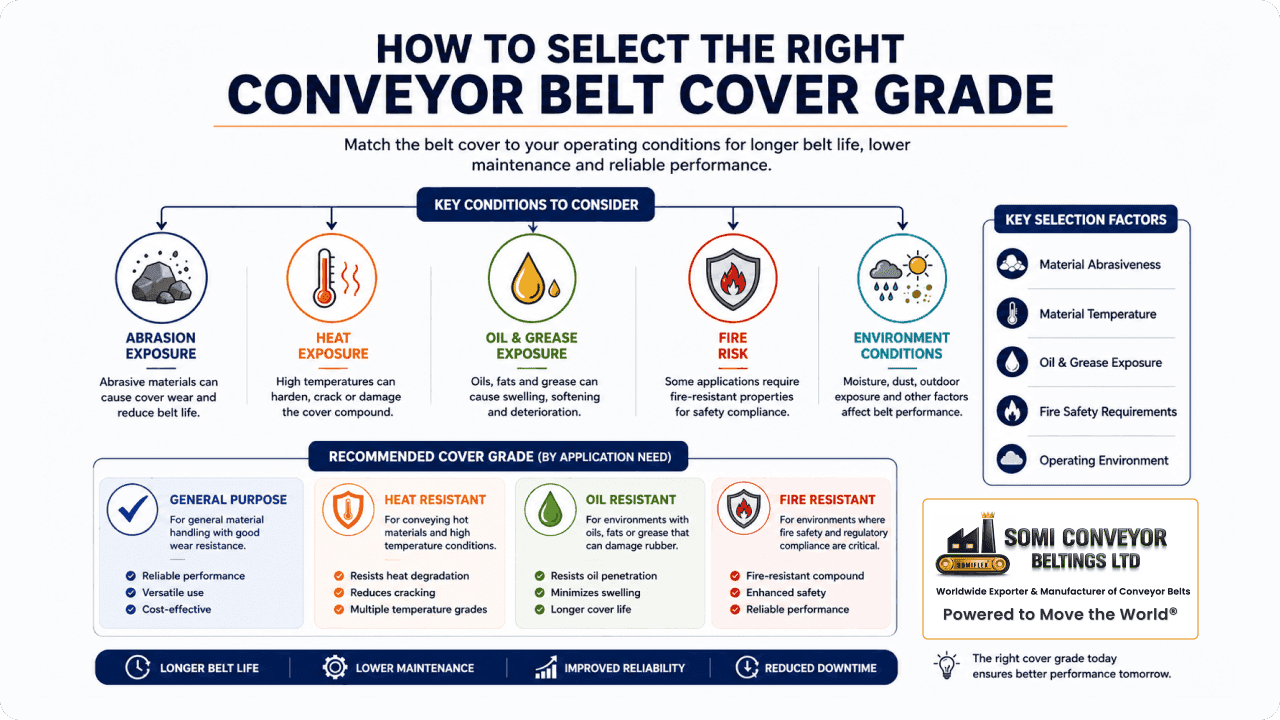
Conveyor belt failures are often traced back to an incorrect cover grade rather than the conveyor system itself. A cover compound that performs well in one application may wear prematurely when exposed to abrasive materials, elevated temperatures, oils, or other demanding conditions. Understanding these operating factors is essential for selecting a conveyor belt that delivers reliable long-term performance.
Why Conveyor Belt Cover Grade Matters
The cover compound is the first line of defense against wear, impact, and environmental exposure. Selecting an unsuitable cover grade can lead to premature belt failure, increased maintenance, and unnecessary downtime. Matching the cover compound to the operating conditions helps improve performance and extend service life.
Factors to Consider When Selecting a Conveyor Belt Cover Grade
- Material Abrasiveness: Highly abrasive materials such as iron ore, aggregates, limestone, and crushed rock can accelerate cover wear. Applications involving continuous abrasion typically require belts with enhanced wear resistance.
- Material Temperature: Conveying hot materials can damage conventional rubber compounds over time. Elevated temperatures may cause hardening, cracking, or reduced belt performance if the appropriate heat-resistant grade is not selected.
- Oil and Grease Exposure: Materials containing oils, fats, or grease can cause standard rubber compounds to swell and deteriorate. Oil-resistant grades help maintain belt integrity in these operating conditions.
- Fire Safety Requirements: Certain industries and applications require conveyor belts with fire-resistant properties to help meet operational safety requirements.
- Operating Environment: Dust, moisture, outdoor exposure, and continuous operating conditions should also be considered when selecting a conveyor belt cover grade.
Recommended Conveyor Belt Cover Grades by Application
General Purpose Conveyor Belts
Suitable for everyday bulk material handling where reliable performance, good wear resistance, and cost-effective operation are required.
Key features:
- Durable rubber cover compounds
- Good abrasion resistance
- Versatile industrial performance
- Suitable for a wide range of conveying applications
Heat Resistant Conveyor Belts
Designed for applications where elevated material temperatures can affect conventional conveyor belt compounds.
Key features:
- Resistance to heat-related degradation
- Improved cover integrity at higher temperatures
- Reduced cracking and hardening
- Multiple temperature grades available
Oil Resistant Conveyor Belts
Engineered for environments where exposure to oils, fats, or grease can reduce conveyor belt life.
Key features:
- Resistance to oil penetration
- Reduced swelling and deterioration
- Improved cover durability
- Reliable long-term performance
Fire Resistant Conveyor Belts
Recommended for applications where fire safety is an important operational consideration.
Key features:
- Fire-resistant cover compounds
- Enhanced operational safety
- Suitable for regulated environments
- Durable industrial performance
The most suitable conveyor belt cover grade depends on the material being conveyed, operating conditions, and environmental factors. Evaluating these requirements before selecting a conveyor belt can help improve reliability, reduce maintenance, and maximize belt service life.
Need Help Selecting the Right Conveyor Belt Cover Grade?
SOMI Conveyor manufactures conveyor belts for a wide range of industrial applications, including abrasion-resistant, heat-resistant, oil-resistant, and fire-resistant grades. Contact Us to discuss your conveying requirements with our team.