How Conveyor Belts Are Manufactured: From Raw Material to Finished Belt
Discover how conveyor belts are manufactured, from rubber compounding and reinforcement to belt building, curing and final quality checks.
How Manufacturing Processes Influence Conveyor Belt Quality
A conveyor belt's performance depends on more than the quality of its raw materials. The way rubber is compounded, reinforcement is prepared, layers are assembled and the belt is cured all contribute to the consistency of the finished product.
Each stage must work in coordination with the next to achieve the required belt construction and properties.
Rubber Compounding and Material Preparation
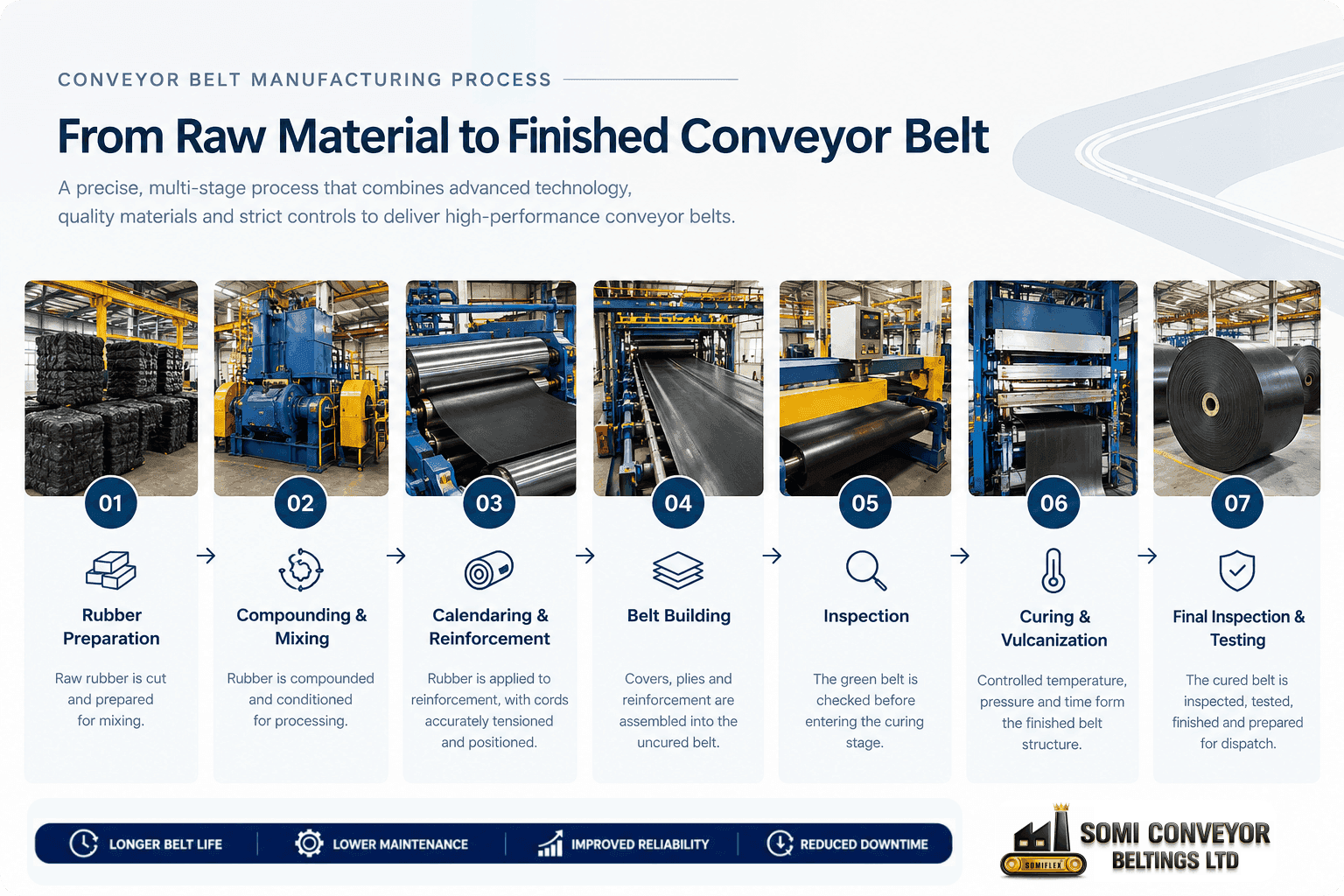
Rubber compounding is an important part of conveyor belt manufacturing. Raw rubber is mixed with the required fillers, processing oils and other ingredients to develop a compound suited to the intended application.
The compound is prepared in stages and allowed to mature before final mixing and further processing. Controlled cooling and handling help prevent premature scorching before the material moves to the next production stage.
Consistent preparation provides the foundation for producing conveyor belts designed for different operating conditions, including general material handling, abrasion and elevated temperatures.
Reinforcement and Belt Construction
The reinforcement provides the structural foundation of a conveyor belt. Depending on its design, a belt may use textile fabric or steel cord to meet its required operating and load-carrying demands.
During manufacturing, reinforcement must be properly aligned and integrated with the rubber layers. For cord-reinforced belts, controlled tension and accurate positioning help maintain uniform spacing and support consistent load sharing across the belt.
The covers and reinforcement are then brought together during belt building. Controlled pressure helps consolidate the layers and minimise trapped air before the uncured belt moves to the curing stage.
These processes are particularly important when manufacturing **[steel cord conveyor belts](/products/steel-cord-conveyor-belt)**, where reinforcement positioning and construction are central to the finished belt structure.
Why Curing Matters
Curing, also known as vulcanization, converts the assembled uncured belt into its finished form. During this stage, controlled temperature, pressure and curing time are applied according to the belt's construction, thickness and width.
Uniform pressure distribution helps maintain consistent thickness across the belt, while appropriate curing conditions support the bonding of its different layers.
The required curing cycle varies with the belt specification. For this reason, controlling the process is an important part of achieving consistent construction across the finished product.
Quality Checks Before Dispatch
Manufacturing does not end when the belt leaves the curing press. The finished belt undergoes inspection and finishing before dispatch.
The process includes checking the belt's surface and construction, cutting its edges to the required dimensions, and taking samples for laboratory testing according to the applicable quality requirements. Where necessary, minor defects can be addressed through repair operations.
These checks help verify that the finished belt meets the relevant requirements before it is prepared for delivery.
Manufacturing Conveyor Belts for Different Applications
Different operating environments place different demands on conveyor belts. Abrasive materials require appropriate wear resistance, while elevated material temperatures call for suitable heat-resistant belt grades. Heavy-duty conveying applications may require steel cord reinforcement.
The manufacturing process must therefore be suited to the intended belt design and operating conditions.
SOMI Conveyor Beltings Ltd. manufactures a range of conveyor belts for industrial material handling, including **[M-24 General Purpose Belts](/products/general-purpose-conveyor-belt-m-24-grade)**, **[Tiger M-27 Abrasion-Resistant Belts](/products/abrasion-resistant-conveyor-belt)**, **[Heat-Resistant Belts](/products/heat-resistant-conveyor-belt)** and **[Steel Cord Conveyor Belts](/products/steel-cord-conveyor-belt)**.
Selecting the right belt involves considering the material being conveyed, operating temperature, loading conditions and the demands of the conveying system.
Looking for the Right Conveyor Belt?
Choosing a conveyor belt suited to your operating conditions starts with understanding your application and its requirements.
Explore the SOMI conveyor belt range or Request a Quote to discuss a suitable solution for your material handling needs.