
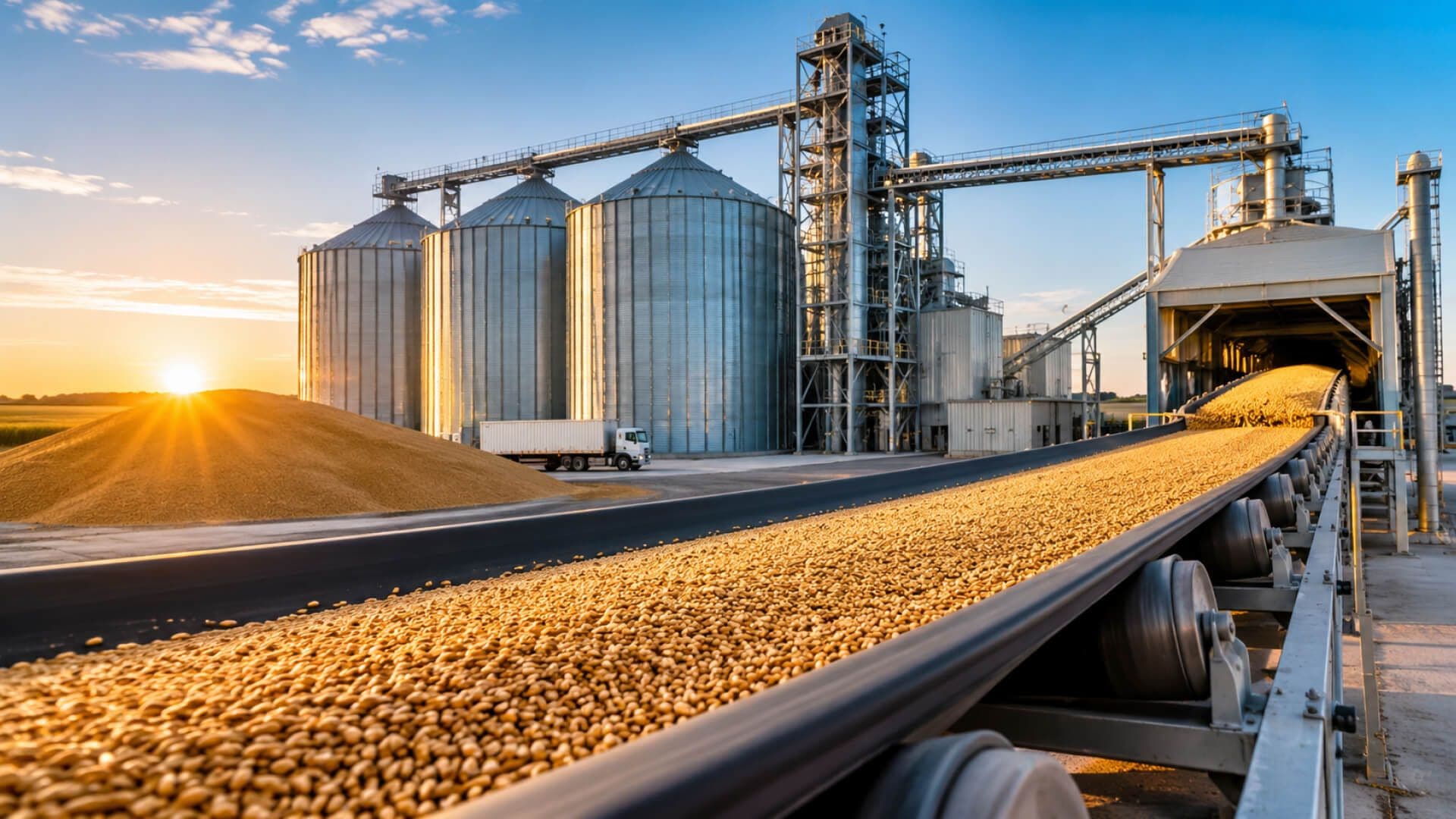
Conveyor Belts for Grain Handling: Challenges and Solutions
Grain terminals and silos need clean, steady throughput more than extreme abrasion resistance. Here is how belt choice affects dust, spillage and product integrity.
Grain moves in huge volumes, often around the clock, and the product itself has value. A conveyor belt in a grain handling operation needs to move wheat, corn, soybeans and other commodities cleanly and consistently while supporting the throughput and operating conditions of the facility.
For grain terminals, silos and related bulk handling facilities, belt selection is influenced not only by capacity and belt speed but also by dust, spillage, containment, routing and maintenance requirements.
Challenges in grain handling
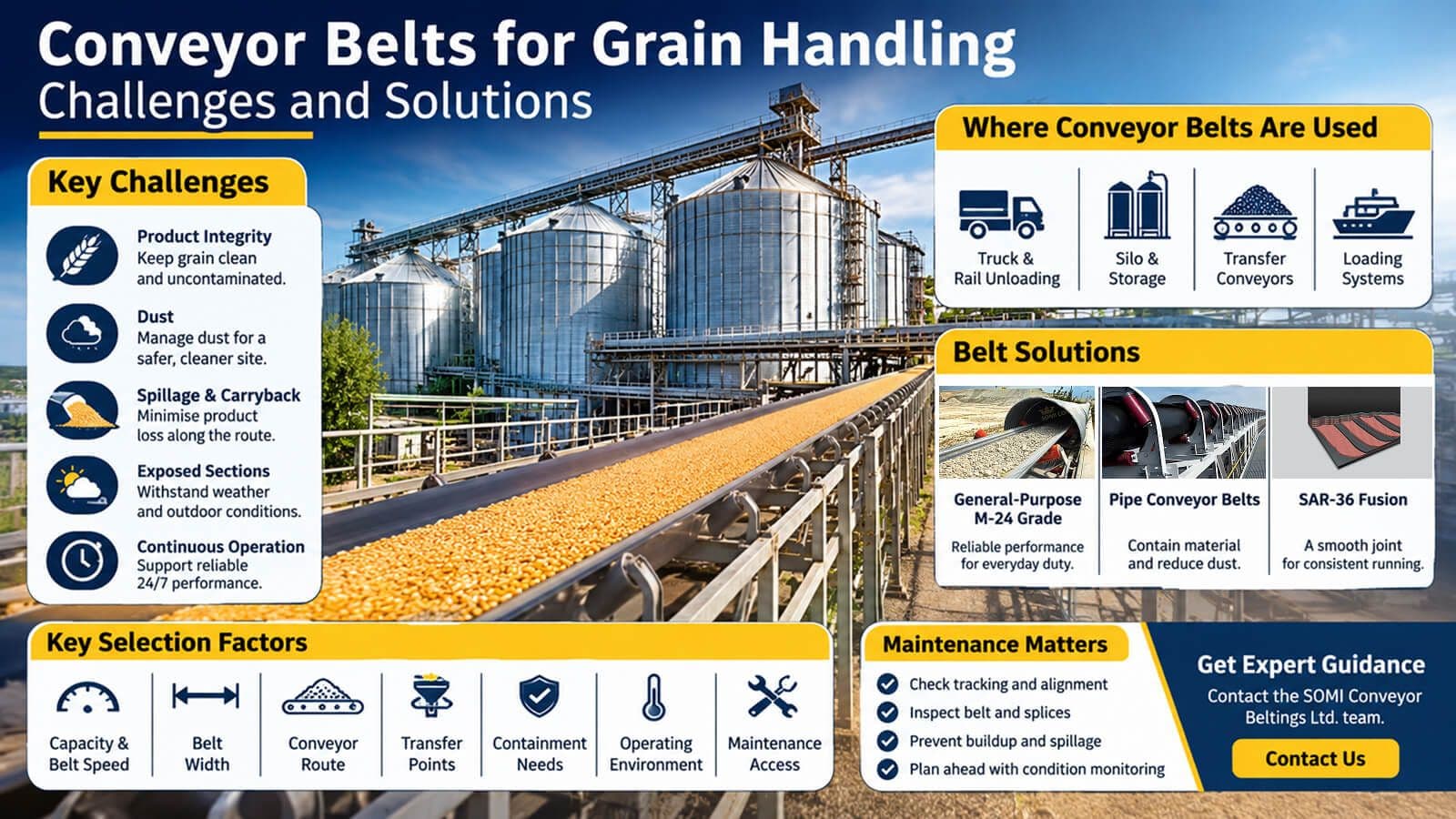
- Product integrity. Grain is a valuable agricultural commodity. Contamination from outside material, spillage and degraded product can create losses and additional handling requirements, so the conveying path needs to remain clean and controlled.
- Dust. Moving grain can generate dust, particularly around loading, transfer and discharge points. Dust is a housekeeping and safety concern for the facility, making effective material containment and suitable conveyor routing important considerations.
- Spillage and carryback. High-volume conveying means that even small amounts of material lost along the route can accumulate quickly. Spillage also increases cleanup requirements and can create additional maintenance around the conveyor.
- Exposed sections. Grain terminals may have long conveyor sections running between buildings, storage areas and loading facilities. Where the belt is exposed to the surrounding environment, the conveyor arrangement needs to account for weather and protection of the conveyed material.
- Continuous operation. Grain handling facilities can experience periods of intensive operation during harvesting and shipping cycles. Unplanned conveyor stoppages can interrupt the movement of material between trucks, rail, storage and loading systems, making dependable belt performance important.
Where conveyor belts are used in grain handling
Conveyor belts can form part of several stages of a grain handling system. Their role varies according to the facility layout and the route through which material moves.
- Truck and rail unloading: Belts can move grain from receiving and unloading areas toward processing or storage.
- Intake and transfer conveyors: Material is transferred between different sections of the handling system.
- Silo and storage systems: Conveyors can move grain to and from storage locations as part of the loading and reclaim process.
- Loading systems: Conveyor systems can transfer grain toward truck, rail or vessel loading points.
- Long-distance transfer routes: Where material needs to travel between separated sections of a terminal, conveyor configuration and containment become important factors.
Each application can impose different requirements on belt construction, routing and maintenance.
Belt solutions for grain handling
1. General-purpose belts for everyday throughput. General purpose conveyor belts can suit many steady-duty grain handling applications where the operating conditions do not require a specialized belt construction. Check general-purpose M-24 grade conveyor belt can be considered for applications where its specifications match the conveyor requirements.
For more on selecting an appropriate cover grade for different operating conditions, see How to Select the Right Conveyor Belt Cover Grade for Your Application.
2. Pipe conveyor belts for enclosed conveying. Where containment and protection of the conveyed material are priorities, the pipe conveyor belt encloses the material path during conveying. This can be useful where the route includes exposed sections or where control of dust and material spillage is an important consideration.
See our guide on when to choose a pipe conveyor belt for more information on the application.
3 Fusion conveyor belts for smooth joint construction. Some grain handling applications may require a belt with a smooth joint construction. The fusion conveyor belt can be considered where its belt construction and application specifications match the conveyor requirements.
Choosing the right belt for a grain handling system
There is no single conveyor belt specification that suits every grain handling application. The belt should be selected according to the complete conveyor system and the conditions in which it will operate.
- Capacity and belt speed: Required throughput and operating speed influence belt selection and overall conveyor design.
- Belt width: The belt width needs to suit the required material flow and conveyor configuration.
- Conveyor route: Horizontal, inclined, long-distance, enclosed and exposed sections can present different operating requirements.
- Transfer points: Loading and discharge areas can expose the belt to impact, spillage and uneven material loading.
- Containment requirements: Where dust or spillage is a major concern, the conveyor arrangement and belt configuration should support effective material containment.
- Operating environment: Temperature, moisture, outdoor exposure and other site conditions should be considered alongside the material being conveyed.
- Maintenance access: Belt inspection, cleaning, tracking and replacement should be considered when selecting and installing the conveyor system.
The belt construction and specifications should be matched to the conveyor's actual requirements, rather than selected on the basis of a single parameter.
Maintaining conveyor belts in grain handling
Even a correctly selected belt requires regular attention to maintain reliable operation. Grain handling systems can accumulate material around transfer points, pulleys and other conveyor components, making routine inspection and cleaning important.
Regular checks should include:
- Belt tracking and alignment
- Belt surface and edge condition
- Splice condition
- Material buildup around pulleys and return areas
- Carryback and spillage
- Signs of abnormal wear or damage
Early identification of tracking problems, splice damage or material buildup can help prevent minor issues from developing into unplanned belt downtime.
Our article on common conveyor belt failures, causes and prevention goes deeper on what to look for, and Eye on Belt, available in M-24 and SAR grade, helps plan replacement before it becomes urgent.
Choosing on belt width or a general purpose label alone can miss these conditions. If you are planning a new grain line or replacing a belt on an existing one, get in touch with SOMI team and tell us about your layout, throughput and operating conditions. We will help you work out which belt fits.