
Conveyor Belts for Aggregates & Quarrying: Challenges and Solutions
Learn how conveyor belts for aggregates and quarrying handle crushed stone, rock, sand, and gravel, while addressing abrasion, heavy impact, sharp-edged materials, and demanding material handling conditions.
Conveyor belts for aggregates and quarrying handle some of the most demanding bulk materials in industrial conveying — including crushed stone, rock, sand, and gravel. Continuous abrasion, heavy impact, sharp-edged material, and demanding operating conditions make belt selection particularly important in these applications.
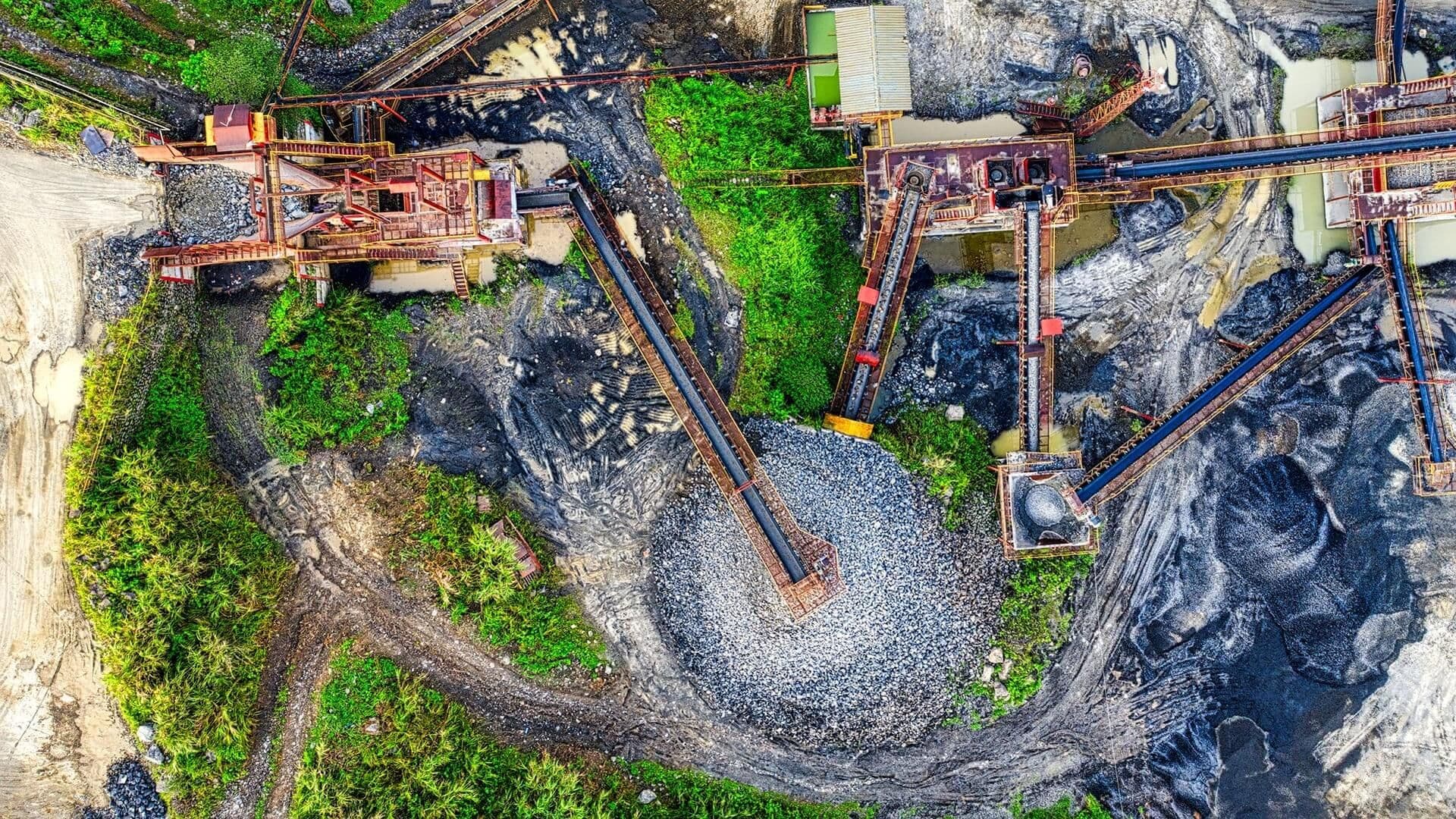
Quarries and aggregate plants depend on continuous material movement, from extraction and crushing through screening, stockpiling, and dispatch. Conveyor systems keep this material flowing, but the belts themselves are exposed to constant mechanical stress throughout the process.
When the belt is not suited to the material or operating conditions, excessive wear, cuts, damage, and unplanned downtime can follow. Selecting the right conveyor belt helps maintain reliable material handling while reducing avoidable maintenance and replacement requirements.
Applications of Conveyor Belts in Aggregates & Quarrying
Conveyor belts are used throughout quarrying and aggregate processing operations, with each stage placing different demands on the conveyor system.
At the extraction stage, conveyors can transport material from the quarry face toward primary crushing. These systems may cover considerable distances and operate under demanding outdoor conditions.
After crushing, conveyor belts move material between crushers, screens, and other processing equipment. These sections can experience significant wear because material is repeatedly handled and transferred throughout the plant.
Sand and gravel operations use conveyors for extraction, processing, storage, and dispatch. Material characteristics such as particle size, moisture, weight, and abrasiveness all influence the belt requirements.
Stockpiling and transfer conveyors then move processed aggregate into storage areas or toward the next stage of handling. Depending on the plant layout, these systems may require either general-purpose belts or higher-strength constructions for longer and heavier conveying duties.
Common Conveyor Belt Challenges in Quarrying and Aggregate Operations
Abrasion
Abrasion is one of the primary causes of conveyor belt wear in aggregate applications. Crushed stone, rock, gravel, and other abrasive materials continuously come into contact with the belt cover.
The right level of abrasion resistance is therefore an important consideration when selecting a quarry conveyor belt, particularly for sections that handle material continuously.
Impact
Large pieces of rock can place substantial impact loads on the belt when they are dropped at transfer points. Repeated impact can damage the belt cover and, under severe conditions, affect the carcass.
Transfer chute design, loading conditions, impact beds, and belt construction all play a role in managing this type of stress.
Cuts and Gouges
Freshly crushed stone can have sharp edges capable of cutting or gouging the belt surface. This type of damage is different from gradual abrasion and can become more serious if it is not identified early.
Material size, shape, drop height, and loading conditions should all be considered when selecting a belt for these applications.
Keeping Aggregate Conveyor Belts Running: Maintenance That Matters
Selecting the right belt is only part of maintaining reliable conveyor operation. Regular inspection and attention to the conveyor system can help identify problems before they develop into major failures.
Key maintenance checks include:
- Inspecting the belt cover for abrasion and excessive surface wear
- Checking for cuts, tears, gouges, and other visible damage
- Monitoring belt alignment and maintaining the required tension
- Inspecting loading zones and transfer points for signs of impact-related damage
- Checking pulleys, idlers, and other conveyor components regularly
- Removing material buildup that could affect belt tracking or operation
Inspection frequency should reflect the conveyor's operating conditions. A heavily loaded crusher-feed conveyor handling large, abrasive rock may require more frequent inspection than a conveyor used primarily for stockpiling.
SOMI Conveyor Belts for Aggregates & Quarrying
SOMI offers conveyor belt solutions for aggregate and quarrying applications, covering general-purpose conveying, highly abrasive material handling, and long-distance heavy-duty conveying requirements.
M-24 Grade Conveyor Belt
Reliable Heavy-Duty Performance for Aggregate Handling
M-24 grade conveyor belts are suitable for general-purpose and heavy-duty aggregate conveying applications involving materials such as crushed stone, sand, gravel, and other bulk materials.
They provide a practical combination of strength, durability, and abrasion resistance for continuous material handling across quarrying and aggregate operations.
Key Features
- M-24 cover grade for demanding material handling applications
- Good abrasion resistance for continuous contact with aggregate materials
- Suitable for crushed stone, sand, gravel, and similar bulk materials
- Suitable for a wide range of general-purpose conveyor applications
Tiger M-27® Conveyor Belt
Super High Tensile Strength for Highly Abrasive Materials
- Cover Grade: M-27 (Tiger Grade)
- Tensile Strength: Super High (Enhanced)
Key Features:
- Super high tensile strength for heavy loads and high-speed applications
- Exceptional abrasion and cut resistance for extended service life
- Optimal troughing capability for efficient material flow
- Anti-bent properties for smooth transportation on curved systems
Steel Cord Grade Conveyor Belt
High Tensile Steel Cord Belts for Long-Distance Heavy-Duty Conveying
Steel cord conveyor belts are designed for applications where high tensile strength and long conveying distances are key requirements.
For large quarrying and aggregate operations, steel cord construction can be suited to conveyor systems transporting heavy material over long distances and under high operating loads.
Key Features
- High tensile strength for demanding conveyor applications
- Suitable for long-distance conveying systems
- Designed for heavy loads and high material capacities
- Suitable for large-scale quarrying and aggregate conveying requirements
Choosing the Right Conveyor Belt for Aggregates & Quarrying
There is no single conveyor belt specification for every quarry or aggregate plant. The appropriate belt depends on factors such as material type, particle size, abrasiveness, impact conditions, conveying distance, capacity, belt speed, and operating environment.
For general-purpose aggregate handling, an M-24 grade belt can provide a suitable combination of durability and abrasion resistance. Where the application involves highly abrasive or sharp-edged materials and greater resistance to wear and cuts is required, Tiger M-27® provides a higher-performance option.
For long-distance, high-capacity conveying systems where high tensile strength is a primary requirement, steel cord conveyor belts can be considered.
SOMI provides conveyor belt solutions for different aggregate and quarrying requirements, from general-purpose material handling to highly abrasive and long-distance conveying applications.
Discuss your aggregate or quarrying conveyor requirements with SOMI and request a quote for a belt suited to your application.