
Conveyor Belts for the Cement Industry: Challenges and Solutions
From transporting abrasive limestone to conveying high-temperature clinker, cement plants demand conveyor belts built for challenging operating conditions. Discover the key challenges and conveyor belt solutions that improve reliability and reduce downtime.
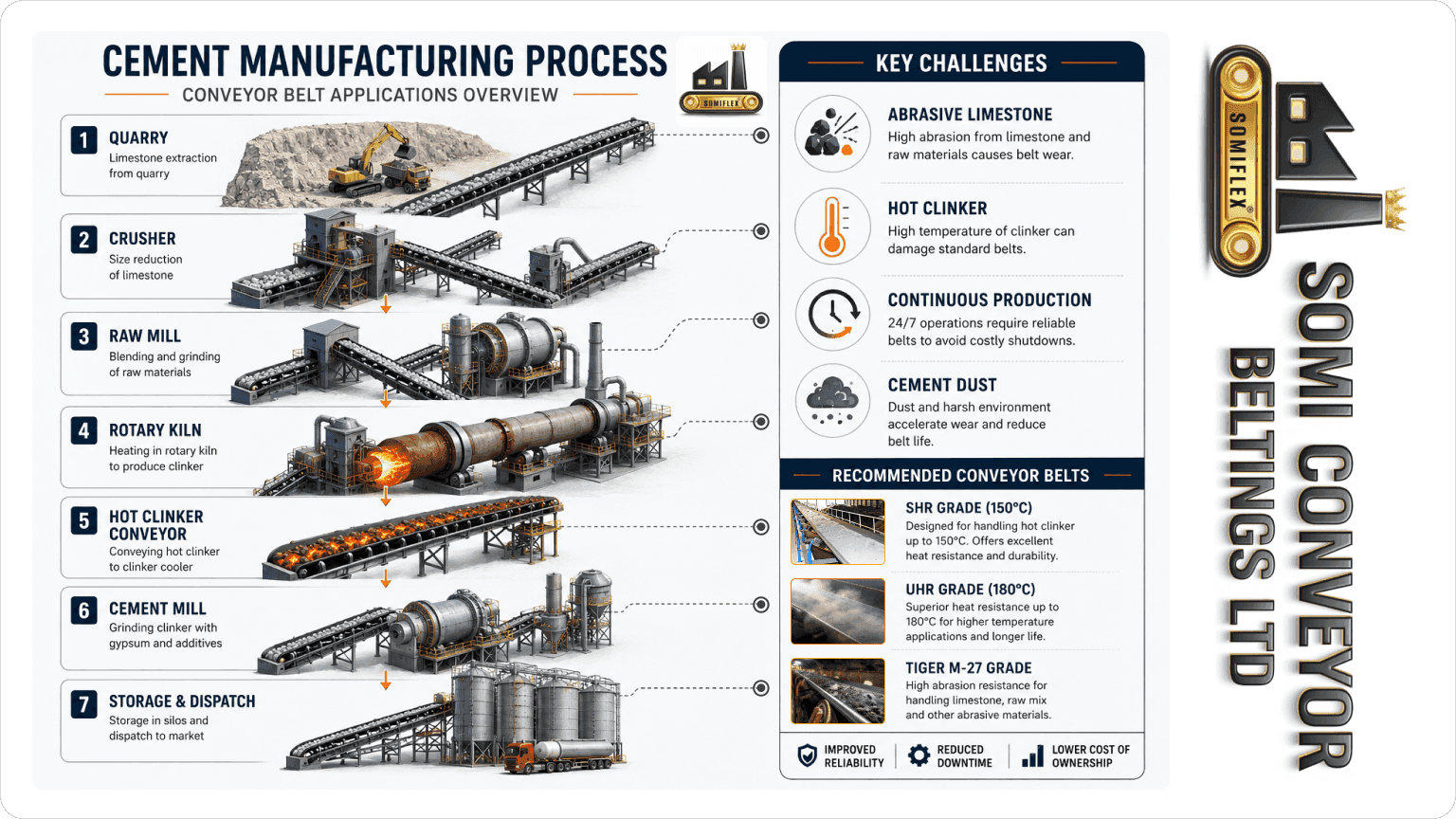
Cement manufacturing is a continuous process where raw materials move through multiple production stages before becoming finished cement. Conveyor belts connect these stages, transporting limestone from the quarry, feeding crushers and mills, conveying hot clinker from the kiln, and handling finished cement for storage and dispatch.
Because each stage involves different materials and operating conditions, a single conveyor belt cannot meet every requirement. Abrasive rock, elevated temperatures, heavy loads, and continuous operation all place unique demands on conveyor belt performance. Selecting the right belt for each application helps improve reliability, reduce maintenance, and support uninterrupted production.
How Conveyor Belts Support Cement Manufacturing
Conveyor belts are used throughout the cement production process, with each application presenting its own operational challenges.
- Quarry and Raw Material Handling: The process begins by transporting limestone and other raw materials from the quarry to the crushing plant. These materials are coarse, abrasive, and often loaded directly onto the conveyor, creating significant impact at loading points.
- Crushing and Raw Mill Feeding: After crushing, limestone is combined with clay, shale, or other additives before entering the raw mill. Conveyor belts at this stage must handle continuous material flow while resisting wear caused by sharp and abrasive particles.
- Clinker Conveying: Inside the rotary kiln, raw materials are heated to produce clinker the primary ingredient in cement. Once discharged, clinker remains at elevated temperatures, requiring conveyor belts specifically designed to withstand heat without premature deterioration.
- Cement Storage and Dispatch: After clinker is ground with gypsum and other additives, the finished cement is transferred to storage silos and packing facilities. These conveyors operate continuously to maintain production flow and support timely dispatch.
The Biggest Conveyor Belt Challenges in Cement Plants
- Abrasive Raw Materials: Limestone, clinker, and crushed aggregates gradually wear conveyor belt covers. Without adequate abrasion resistance, belts require more frequent maintenance and replacement, increasing operating costs and production interruptions.
- High Temperature Clinker: Fresh clinker can retain significant heat after leaving the kiln. Standard conveyor belts may harden, crack, or lose flexibility when exposed to sustained high temperatures, making heat-resistant compounds essential for these applications.
- Continuous Production Requirements: Many cement plants operate around the clock to meet production targets. Conveyor belt failures can stop an entire production line, making durability and consistent performance critical considerations during belt selection.
- Dust and Material Build Up: Cement production generates fine dust that can accumulate around conveyors, transfer points, and pulleys. Combined with outdoor installations exposed to rain and changing temperatures, these conditions increase maintenance demands and accelerate component wear.
Selecting the Right Conveyor Belt for Cement Applications
Different areas of a cement plant require different conveyor belt characteristics. Choosing the appropriate belt depends on the operating conditions rather than using the same construction throughout the plant.
Key selection factors include:
- Material temperature
- Material abrasiveness
- Impact loading at transfer points
- Conveyor length and capacity
- Environmental conditions
- Expected maintenance intervals
Matching the conveyor belt to its specific application improves equipment reliability, extends belt service life, and helps maintain consistent production with fewer unplanned shutdowns.
Recommended Conveyor Belts for Cement Plants
SHR Grade Conveyor Belt (150°C)
SHR Grade Conveyor Belts are designed for handling hot clinker and other elevated-temperature materials commonly encountered during cement production. Their heat-resistant compound helps maintain performance while reducing heat-related cover damage.
Key features:
- Heat resistant up to 150°C
- Reliable clinker conveying
- Reduced thermal cracking
- Suitable for continuous production
UHR Grade Conveyor Belt (180°C)
For applications involving higher material temperatures, UHR Grade Conveyor Belts provide additional heat resistance while maintaining belt integrity under demanding operating conditions.
Key features:
- Heat resistant up to 180°C
- Excellent thermal stability
- Longer service life in high-temperature applications
- Reliable continuous operation
Tiger M-27 Grade Conveyor Belt
Tiger M-27 Grade Conveyor Belts are well suited for transporting abrasive materials such as limestone, gypsum, and crushed aggregates during the early stages of cement manufacturing.
Key features:
- Superior abrasion resistance
- High cut and tear resistance
- Durable cover compound
- Reduced belt replacement frequency
Reliable Conveyor Belt Solutions for Cement Manufacturing
Every stage of cement production places different demands on conveyor systems. From handling abrasive raw materials to conveying hot clinker, selecting conveyor belts that match the application helps improve operational efficiency, reduce maintenance requirements, and extend service life.
SOMI Conveyor Beltings Ltd. manufactures conveyor belts engineered for the demanding conditions found in modern cement plants. Whether your application requires abrasion resistance or high-temperature performance, our range of industrial conveyor belts is designed to support reliable material handling across the entire cement manufacturing process. Request a Quote for your cement conveyor belt requirements.